
The ideas run from a few plants or one velvet armchair to emerald on all four walls, and how much daylight and dark wood the room has decides where you land.
Deep green closes in with dark floors, dark furniture, and one small window; in that room, a gray-leaning sage like Farrow & Ball’s Lichen is easier to live with.
1. Muted Sage With Soft Neutrals
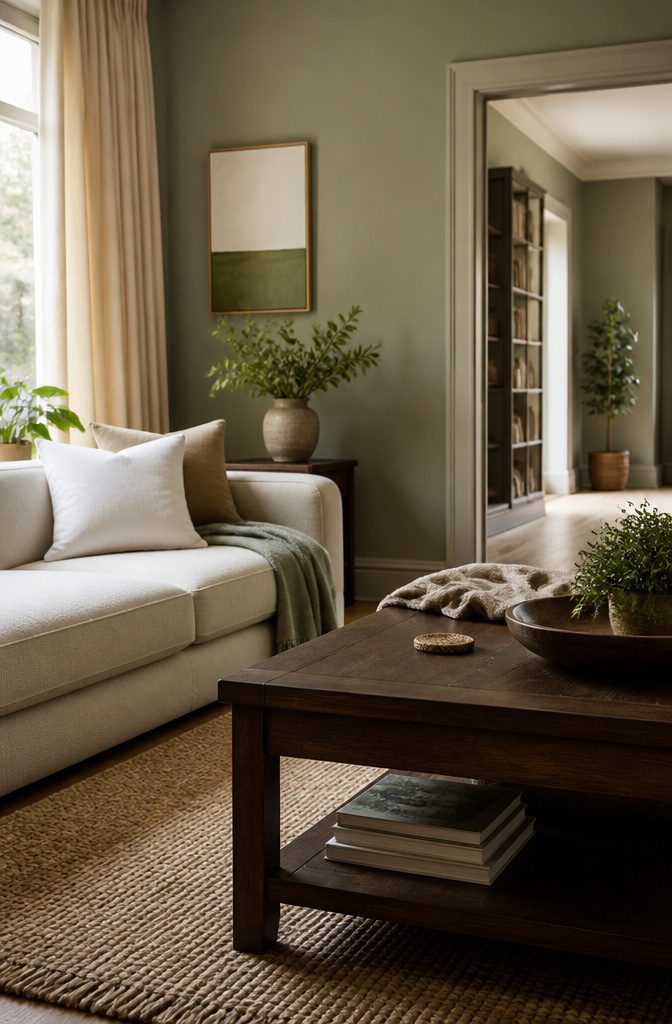
If you want green to behave like a neutral, lean toward gray or blue when you pick a sage or mossy shade. Farrow & Ball’s Lichen is a good reference point.
It’s named for the faint, shifting color of algae creeping over old stone, which is about as quiet as green gets. Gray-leaning sage also sits well beside true gray furniture or textiles.
Surround it with cream, beige, tan, or bright white upholstery and curtains, then add a few plants. Keep one darker wood piece, such as a coffee table or media console, so the room has something to anchor it.
With so little contrast, the room reads soft-spoken and restful, which suits a living room that has to handle busy weekdays.
Recommended Products

Sage Green Inspirational Wall Art – Calm & Uplifting: This floating framed canvas wall art features soothing tones of sage green with inspirational quotes, bringing a peaceful and stylish vibe to your space. Perfect for creating a fresh and calming atmosphere throughout your home.

Elegant Botanical Watercolor Design – This sage green wall art decor set of 3 features delicate botanical paintings with soft watercolor floral details. Each picture captures the beauty of greenery and flowers, adding a calming, nature-inspired atmosphere to any space.

2. Olive With Dark Wood
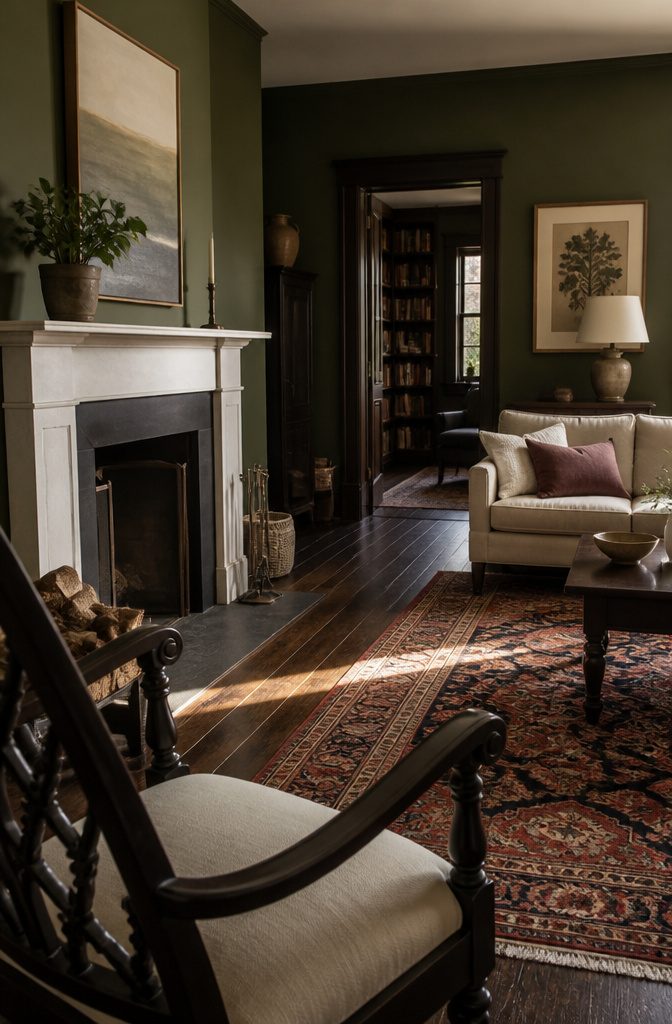
Dark sage or olive on the walls, dark wood underfoot, and a deeper accent color nearby make a bolder, more grounded room than pale sage can.
Dark floors and furniture already read as formal, so this pairing suits traditional and vintage-style living rooms best. Pick a green close in depth to the wood so the two look related instead of competing.
Left alone, that much depth starts to feel closed in. Bring in richer, hotter colors, starting with a rug, then add pillows and other accessories.
Cream also helps. A white fireplace stands out sharply against dark tones, even in a small room.
Recommended Products

🌸 ELEGANT FLOWER VASE WALL ART FOR HOME DECOR-Bring a fresh and artistic touch to your space with this floral vase wall art featuring delicate white flowers, an olive green background and a charming modern botanical design.

Ready to Hang: Size : 12x16in(30x40cm),wall art is already perfectly stretched over solid wooden frame and hooks have been mounted on panel, you could easily hang the framed canvas wall art on at any time

Let All That You Do Be Done With Love Wall Art:Size is 9x11in or 12x16in Equipped with self-adhesive hook and loop fasteners for easy installation.
3. Bold Emerald Walls
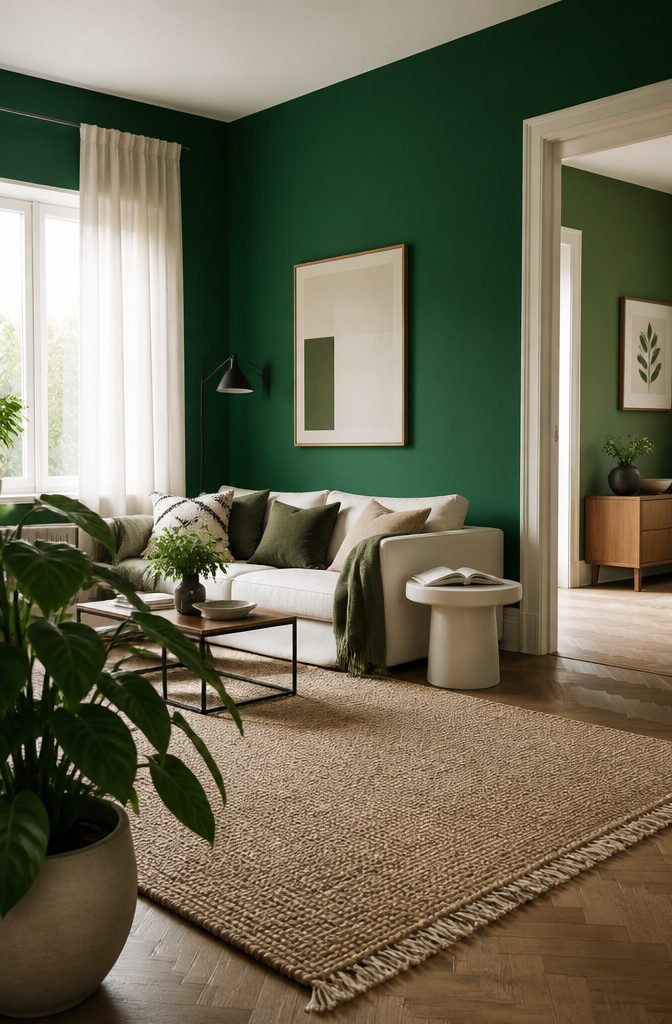
Deep green on all four walls is the strongest color statement on this list, and the cream, beige, or white around it does the balancing.
Keep the sofa, rug, and larger furnishings in white, cream, or beige so the green reads as a backdrop instead of a cave. Floor-length curtains in a pale shade also break up the wall color in a natural way.
Paint in a bright emerald mid-green gives the most impact. Wallpaper in the same color looks softer and suits a more traditional room.
The price of that punch is a room with little white relief. Dark floors, dark furniture, and one small window will make the green close in fast, and in that room sage is easier to live with.
Recommended Products

[ECO-CONSCIOUS LIVING] - We believe green is a beautiful foundation for any home. Crafted from renewable, plant-based materials and made through recyclable, eco-friendly processes, this green wallpaper brings a fresh, nature-inspired feel to your space. Free from harmful additives, it helps keep indoor air cleaner and healthier for everyday living. More than just decoration, it creates a calm, protective backdrop—perfect for supporting a more comfortable, wellness-focused home

[Design]--The combination of dark gold lines outlining elements such as cheetahs, cranes, and palm trees with a dark green background creates a highly distinctive and luxurious jungle animal wallpaper. Match your furniture with different styles to create different decorative styles, and help you complete visual jumps economically and practically, bringing unique fashion to your home.

Emerald Green Peel and Stick Wallpaper【Design and Size】This emerald green wallpaper roll measures 17.7 x 118 inches, covering a spacious 14.5 sq. ft. The embossed flock wallpaper ingeniously integrates vintage and fashionable elements, exhibiting unique textures and layers on its surface, creating a rich and eye-catching visual experience for the wall.
4. Plants and Leafy Prints
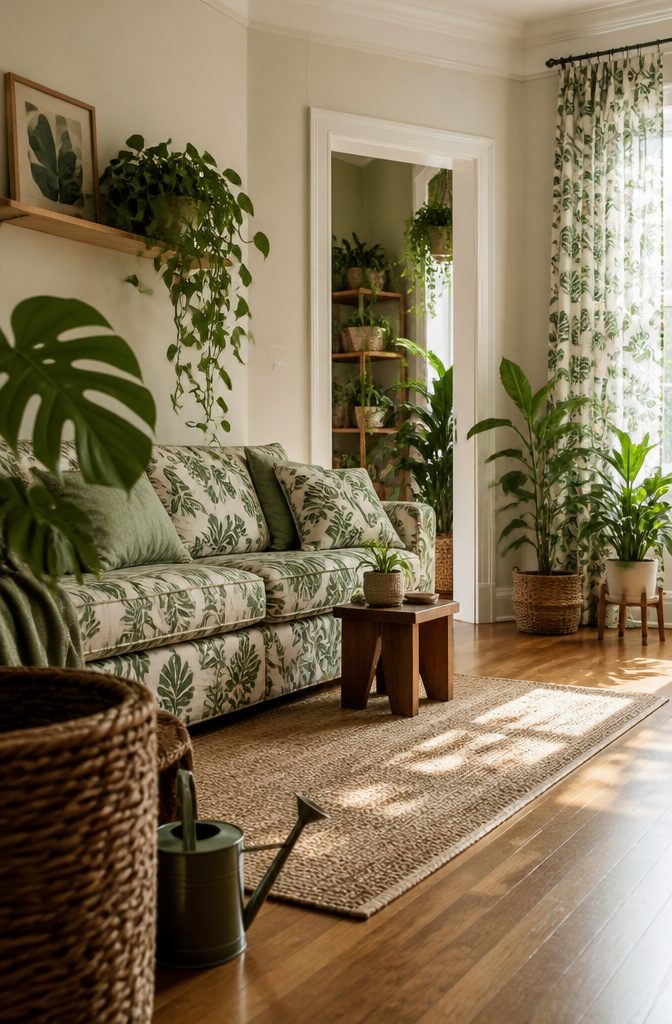
Plants are the cheapest way into a green living room, and a renter can pack them up at move-out.
Mix trailing plants with upright ones so the green sits at different heights, such as one spilling off a shelf beside another standing on the floor.
They add texture too, and a wood side table or woven basket nearby adds more.
Green is the most restful shade, and leaf prints push that calm further. Curtains or upholstery in a leafy pattern are easier to live with than wallpaper if you rent.
Stacking patterns works when they share the same leafy subject: a leaf-print sofa against leaf-print wallpaper reads as one idea, while leaves against stripes or plaid compete.
Recommended Products

28 inches: Pots are 4.9'' tall, 4.3'' wide, monstera plants are 28'' tall, our faux trees indoor are perfectly proportioned to fit any shelf or desk. Unique black and gold pot design adds premium beauty to your home

Adjustable Width Plant Stand: This Indoor Plant Stand adjustable from 8 to 12 inches in width, which allowing you to place plant pots of different sizes; The adjustable plant stand has 2 height displays, you can switch heights by flipping the stand over

【Indoor Plant stand】: Raised your lively plants in an higher place and settled it in your corner, made it attractive and eye-catching in your home. Tiered plant stand indoor in simple and natural design is suitable for all kinds of small spaces, placed in your bedroom, living room, sofa corner, hallway, and turns your boring small space into a vibrant and elegant scenery. It's widely used indoor with movable wheels.
5. Green With Blue or Teal
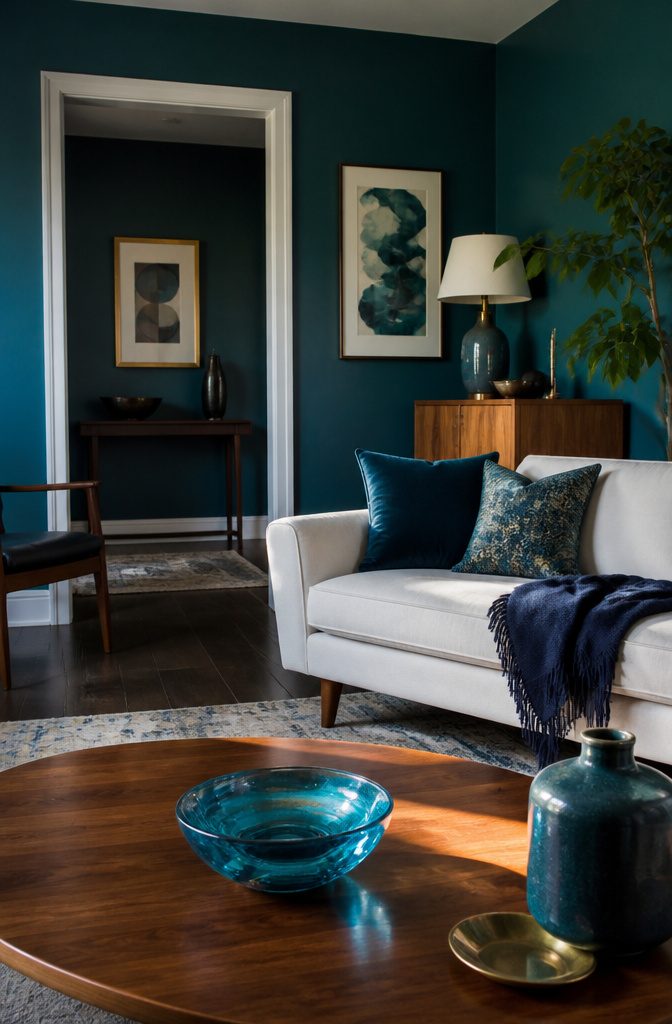
Blue against a dark green keeps the room bold and adds a bright edge. Pair the walls with a white sofa, then bring in blue through pillows, a throw, or a vase.
Shade changes the mood.
Deep teal reads dark and atmospheric, especially over dark flooring with warm Mid-century furniture. Turquoise goes the other way.
It can lean blue or green, but it always suggests summer and warmer climates. Sunshine yellow upholstery adds more warmth.
On teal-leaning walls, try jewel tones: a lime green sofa, a blue coffee table, and dark brown and bronze accents to tie it together.
Recommended Products

Package Includes: Set of 2 brich beige leaf pattern sheer linen curtains; each panel measures 52 inches wide by 84 inches long. Includes 8 bronze grommets with 1.6-inch inner diameter. Easy to install and slides smoothly.

Package Includes: 2 Panels of Non-See-Through grey and white leaf floral printed semi-sheer curtains. Each panel measures 52"W x 63"L.

COUNTRY CHARM &NATURAL ART: Minimalist Scandinavian design inspired by the creation of attractive branch shadow patterns and using the jacquard craft to present the silhouette of plant leaves in comfortable tones on linen curtains, enhancing the vibrancy and beauty of your room. Ideal for modern farmhouses, minimalist or bohemian interiors and pastoral styles, vintage decor, all add to the artistic atmosphere.
6. Green With Blush and Gold
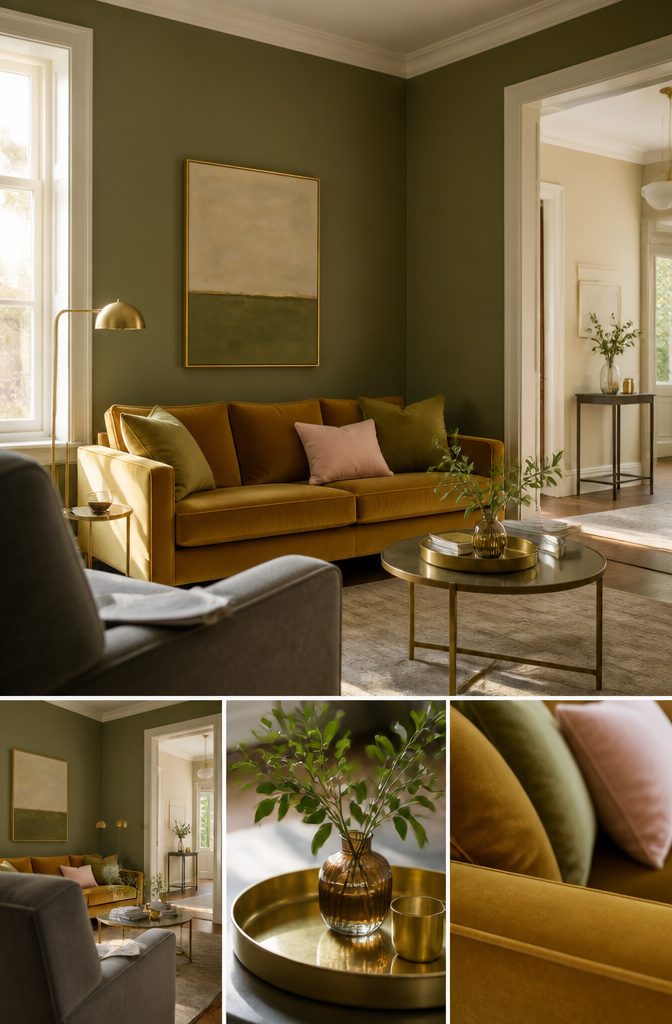
Deep forest green holds up against burnt orange furniture, especially with touches of gray and bright white accents set right against the wall.
Pink changes the style more than any other warm shade:
A dark green and a blush pink are a combo to be reckoned with and the tones you choose to match can totally change the style of your living room.
Deep green with dusty pink reads contemporary. Pale pink with pale green reads Regency.
Olive rooms wake up with a gold sofa and gold accessories, plus one pastel pink piece that appears only once. Keep the warm color to a minority of the room, so the green stays the main color.
Recommended Products

Size & Package: 12x16 inch, multiple sizes to meet your home decoration needs. Every product is carefully crafted by us and we will protect these prints with good packaging to prevent damage.

Modern Abstract Canvas Living Room Wall Art: Each piece in this set of 3 is a framed abstract canvas wall art, expertly crafted with high - quality materials. The sturdy frames not only protect the canvas but also add a touch of elegance, making them perfect for modern interior aesthetics.

Sage Green Abstract Artwork: This nature wall art is soft and textured. It mixes sage green, muted gray and warm earth tones. It is a framed canvas painting, featuring subtle impressionist abstract scenery with blended color gradients to add layered texture and calm peaceful vibes to any space.
7. Green and Brown Boho
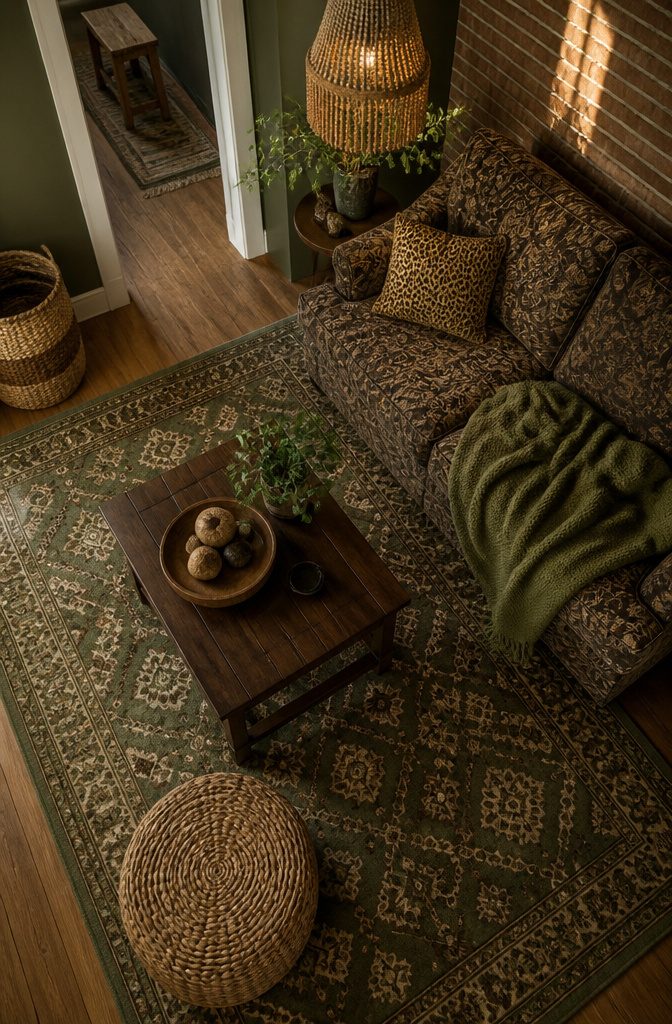
Green and brown is the pairing that keeps a boho room relaxed.
Stick to those two colors and you can push the pattern harder, so leopard print, a beaded light fixture, and exposed brick can share a room without it feeling busy.
Start with wood furniture, then add a patterned rug and a woven piece or two so the browns appear at different heights and in different textures.
Natural textures in off-white and light brown also suit a darker olive wall, and they keep the green in the background for a calmer feel. If the color works, carry it past the living room and down a hallway.
Recommended Products

Flowy Wide Leg Silhouette that Flatters Curves:These plus size wide leg pants feature a relaxed palazzo silhouette that drapes smoothly from hip to ankle. The loose flowy design helps balance curves while visually elongating the legs, creating a flattering shape that feels comfortable for everyday wear. Perfect for women looking for stylish plus size casual pants with a modern wide leg fit.

Vintage Botanical Wall Art: Three coordinated flower designs feature olive green stripes, cream blossoms, burgundy borders, leafy stems, and antique-inspired illustrations; ideal for vintage botanical decor, olive green wall art, flower artwork, grandmillennial decor, English country style, cottage garden art, traditional home accents, retro floral pictures, heritage decor, romantic garden imagery, and classic nature-inspired interiors
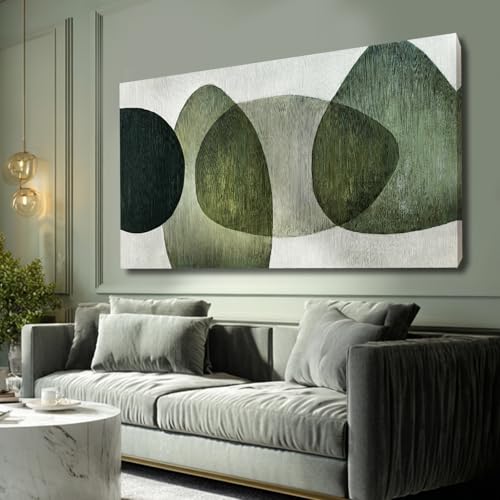
Size and Packing:Measuring 24x48 inches, our geometric abstract wall art is carefully wrapped in protective material to prevent damage during transportation, ensuring it arrives in perfect condition.
8. One Green on Every Surface
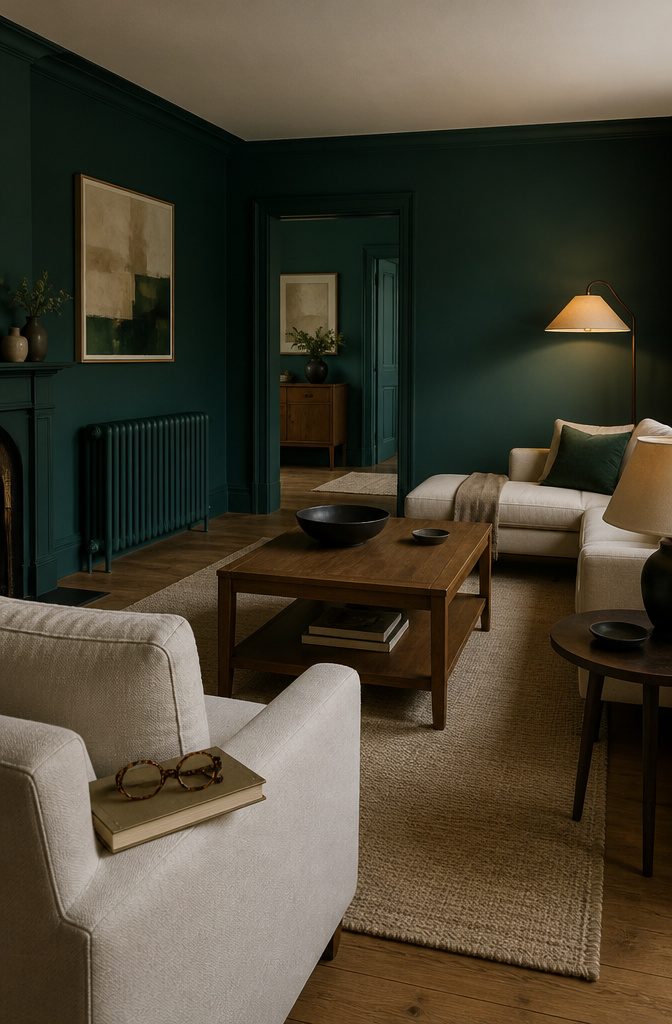
Pick one green you love, carry it across all four walls, and paint the woodwork and radiators the same color so nothing breaks the wrap.
A darker, warm green such as deep teal makes this the cozier route. Hang artwork to lift the walls, and choose furniture in contrasting colors so the pieces don’t vanish into the paint.
Color blocking is the lighter alternative. Green rises only a quarter of the way up the wall and crisp white takes the rest, so the room stays airy while the furniture and decor stand out.
Choose the all-over version for a cozy room and the color block for one that needs to feel open.
Recommended Products
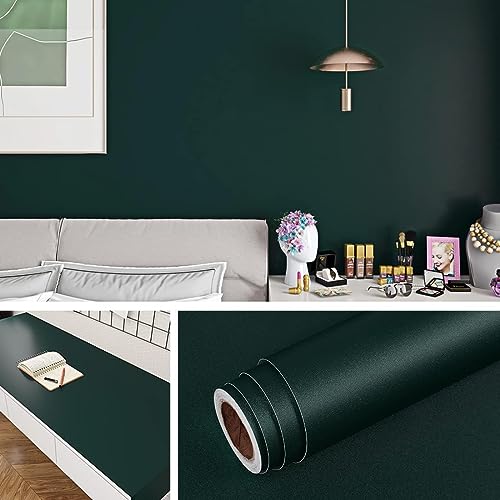
🏠Details: 15.8 X197 Inch, total 21.65 square feet(40cmX5m). Self adhesive. Made of durable vinyl. Peel and stick dark green wallpaper is alternative to green paint. Oil proof. Waterproof. Fully removable.

Design: We use elegant dark green to convey mysterious inspiration and have strong vitality. With the elegance and fragrance of the garden, the dark green wallpaper gives you a calm and sexy atmosphere, letting you stay in the nature

Dark Green Wallpaper Size: Each roll of this dark green peel and stick wallpaper measures 15.8 inches wide by 276 inches long, covering approximately 30.14 sq.ft. Made of premium thickened vinyl, it is more tear-resistant than standard wallpaper.Made from low-odor, responsibly sourced vinyl material with a matte finish, it is suitable for all indoor living spaces.
9. Green Wallpaper Feature Wall
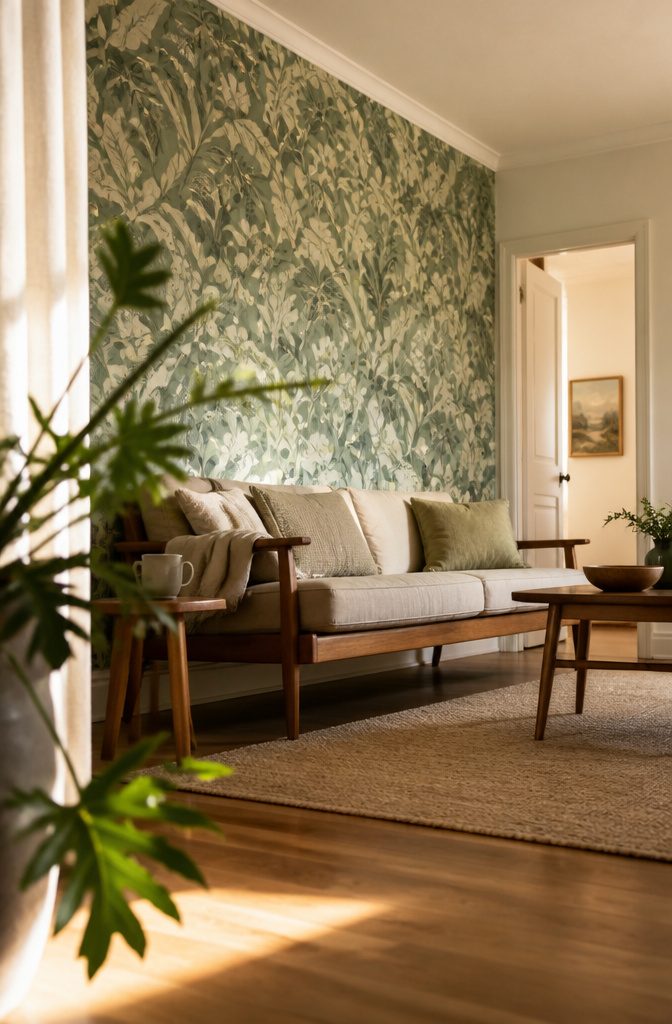
A large-repeat green print on one wall gives you the most impact for the least wallpaper. Hang it behind the sofa or main seating, where your eye already lands.
The print then sets the tone for the furniture in front of it. Mid-century modern pieces look right against it, and the same wall works with other furniture styles too.
Covering one wall means buying fewer rolls than a full room needs, so both the cost and the commitment stay small.
That suits renters and first-time owners who aren’t sure about a color yet. Keep the other three walls quiet so the pattern is the only loud thing in the room.
Recommended Products


Lifelike Realism & Natural Beauty: Expertly crafted with detailed stems and lush green leaves, this artificial tree for home decor indoor boasts a "Real to the Touch" texture that mimics a living Dracaena. An ideal floor plant that doubles as elegant tree decor indoor— perfect for office plants decor, living room corners, and entryways.

EASY ASSEMBLY:Features quick, wobble-free assembly: simply twist to lock branches onto the pre-assembled trunk. Arrives fixed in a white pot (approx. 5.7”H x 6.7”W) nestled inside a soft cotton woven basket (approx. 10”H x 9.5”W). The textured cotton adds natural warmth and style, bringing lasting Mediterranean charm to your space.
10. Two-Tone Green With One Wild Card
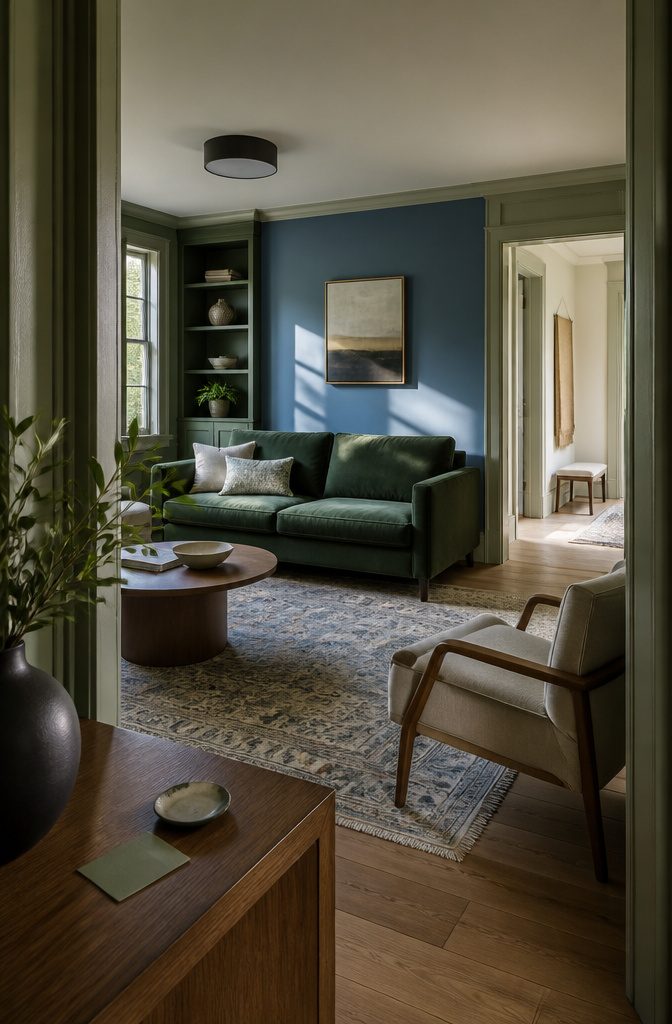
Two greens already make a finished palette: a softer one on most walls, a deeper one on the sofa, shelves, or built-ins.
A third bold shade is the wild card, and it works only if it stays on one wall, or part of one wall.
The wall behind the sofa is the usual choice. A single panel or the lower half of that wall also works.
Once the bold color shows up on a second wall, the ceiling, or the trim, it stops reading as an accent and starts competing with the greens.
Pick the wall you look at most from the doorway, and leave the rest of the room to the two greens. Test a sample patch first, since a bold shade looks stronger across a full wall than on a swatch.
Recommended Products

Elegant and Versatile Design: These curtains feature combination of gold green leaves and white floral patterns, adding a touch of retro elegance and farmhouse charm to any room, whether it’s your living room, bedroom, or dining area.

Versatile Use: Our boho curtains suit most windows and rooms and can be hung separately or used with sheer curtains. Perfect for home decor such as bedroom, living room and dining room.

11. Color Zones in Open Plans
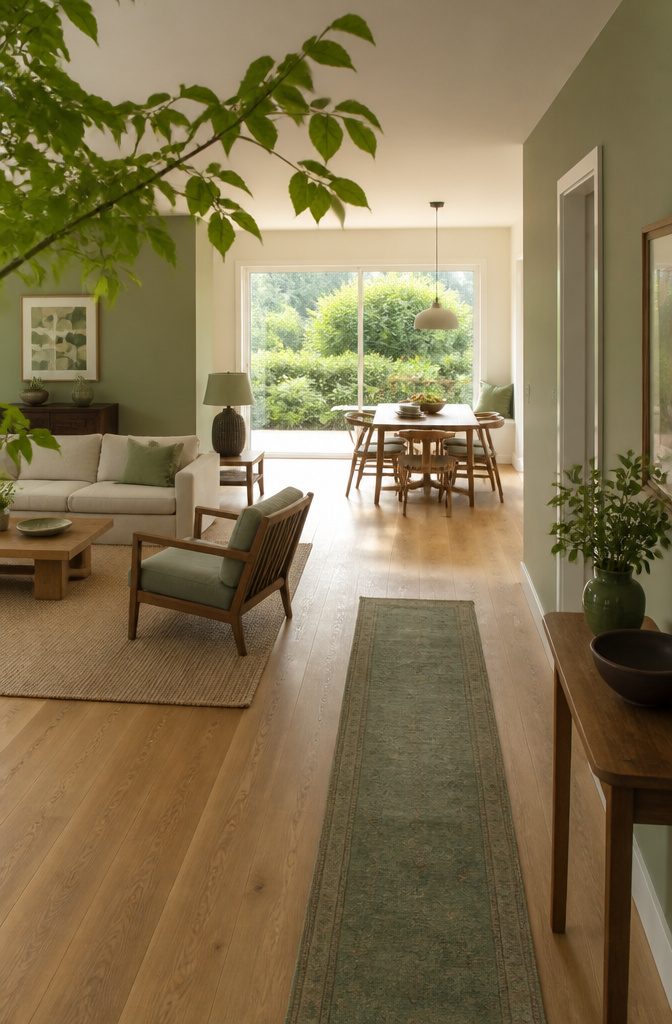
Paint the living area green and give the dining or entry zone a different color, and an open plan reads as separate spaces without a wall.
Harmonious colors are the safer choice. A sage living area beside a creamy neutral or a softer green holds together almost automatically.
Contrasting colors, such as green against navy, draw a sharper line between zones, but they only look planned if each color shows up in both areas, in a pillow, a rug, or a lamp.
Either way, let the green continue into the hallway. That one repeated color links the zones, so the whole space reads as a single scheme.
Green in Small, Large, and Dark Rooms
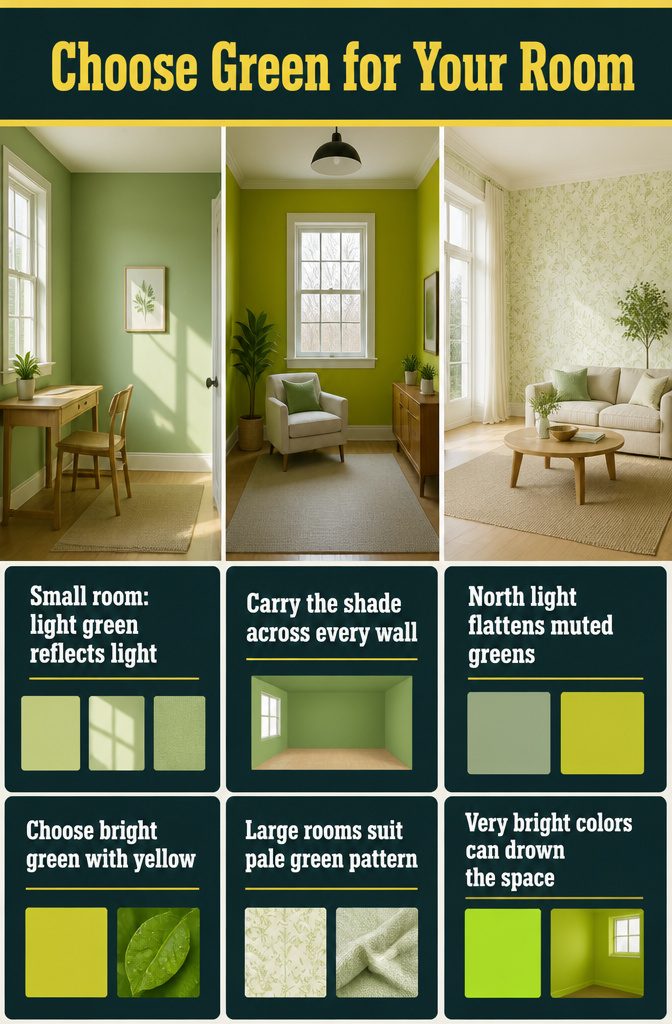
Room size and daylight change how a green reads, so choose the shade to fit the room.
- Small room: Choose a light green that reflects light but has enough depth to look deliberate, and carry it across all the walls. Bright colors are often claimed to make a small space feel larger. Treat that as a claim, since the light reflection is the benefit you can count on.
- Dark or north-facing room: Pick a bright, juicy green with a touch of yellow in it, since cool north light flattens muted shades. It holds up against limited daylight and looks rich instead of garish.
- Large, airy room: Very bright color can drown the space. A wallpaper with a delicate pale green pattern keeps the room light and still gives you green.
Green Without Painting Walls
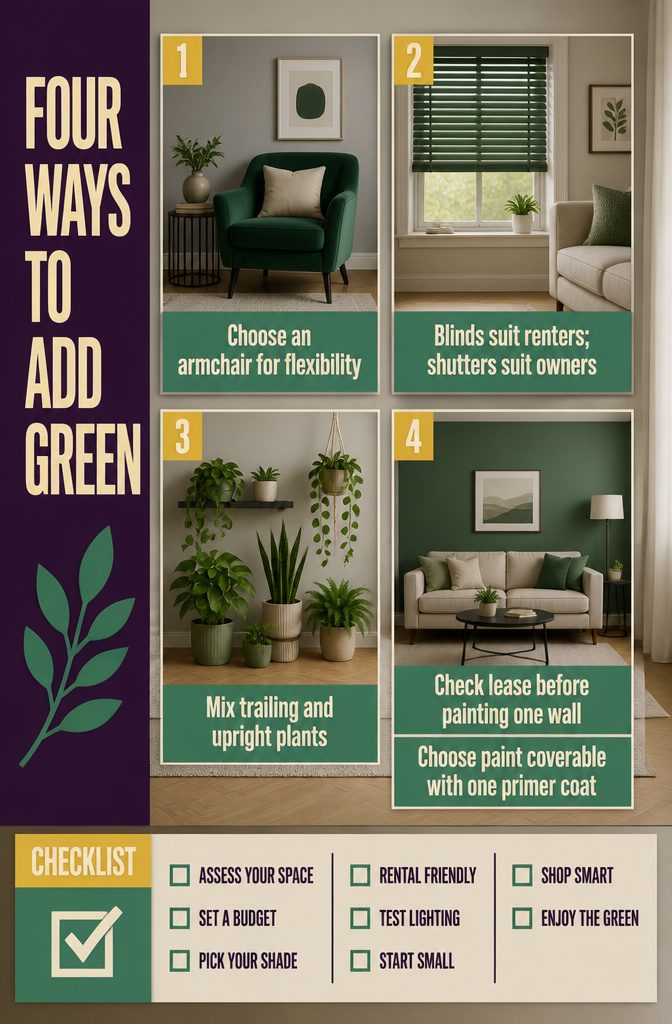
These four options add green without repainting the whole room:
- A green velvet sofa or armchair against gray walls makes a focal point and softens darker or neutral shades. An armchair is the lower-commitment pick, and it moves with you.
- Green blinds or shutters add color at the window while the rest of the room stays neutral. Blinds suit renters better; shutters make more sense in a home you own.
- Plants are the fastest way to add green. Mix trailing and upright types, and see the plants section for specific picks.
- One accent wall behind the sofa limits the paint to a single wall. Check your lease first, and choose a shade you can cover in one coat of primer.
Green for Cottage, Formal, and Modern Rooms
Cool, gray-leaning greens suit a formal or period room because they read calm and settled rather than fresh. Keep the trim and ceiling pale so the walls carry the only color statement.
For a cottage look, choose a small-repeat green floral wallpaper, often called a ditsy print.
Pair it with dark woods and furs for a cozy, welcoming feel. A larger pattern would push the room toward bold, so keep the repeat small.
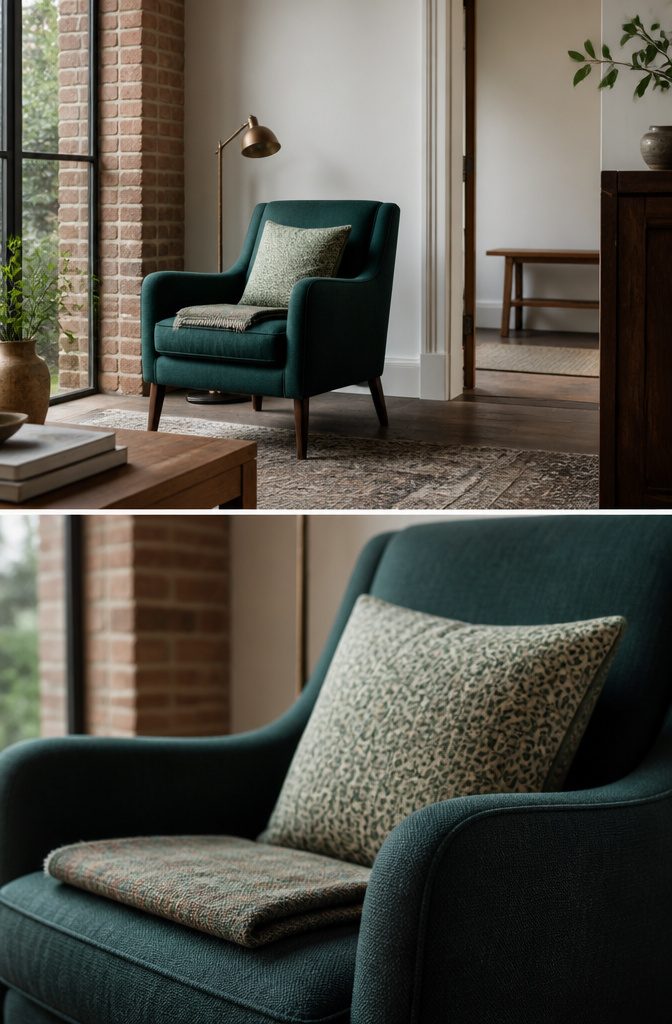
For a contemporary room, leave the walls alone and buy one piece of furniture, such as a sofa or armchair, in deep petrol green rather than a louder apple shade.
It sits well beside metal-framed windows and exposed brick, and it keeps the room stylish without getting loud.