
Remodel only the shower if the toilet, vanity, floor and lighting still work; it skips the cost and mess of the rest of the room.
Go full-bathroom if water damage has reached behind the shower walls. Either way, skip any bid without a waterproof membrane, and plan for 3 to 7 business days without a shower.
Shower-Only or Full Bathroom
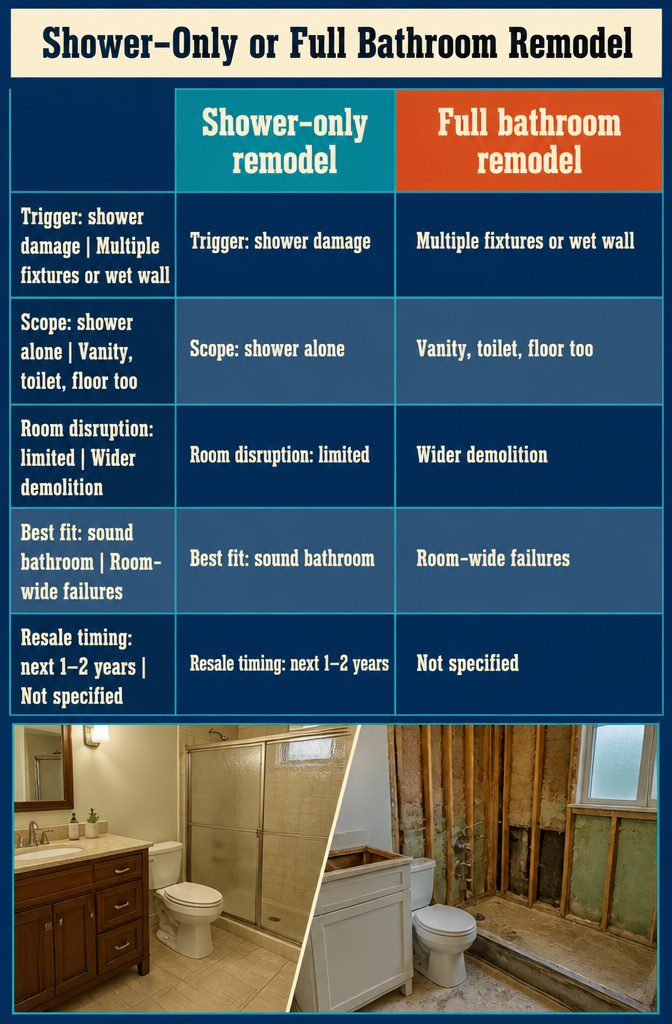
If the toilet, vanity, flooring and lighting still work, remodel only the shower. Cracked or moldy tile in an otherwise fine bathroom is the clearest case.
A sound layout with a dated shower is another. You skip the cost and mess of the rest of the room.
Switch to a full remodel when the vanity, toilet and floor all need replacing too, or when water damage has reached behind the shower walls. Opening a wet wall and leaving the rest invites a second round of demolition later.
Full-room work comes in 4 types: complete, pull-and-replace (new sink, toilet and tub in the same layout), cosmetic (paint, faucets, showerhead, light fixtures) and ground-up.
Selling in the next 1 to 2 years? A targeted shower update gives the best return for the effort.
Recommended Products

【PREMIUM SHOWER TRAY】 - Our shower curb kit provides you a shower tray made of EPS high-pressure foam board. Overall size: 38 in × 60 in (965.2 mm × 1524 mm). The drainage hole is set with a 4 in (10 cm) diameter for effective water running. The shower tray is equipped with a gray water-impermeable membrane with fluffy texture on the surface, convenient for mortar brushing. The tray forms a 5° inclination from four sides to the middle, which is convenient for drainage.

Complete Waterproofing Kit: This waterproofing seal kit includes 6 inside waterproofing membranes and 4 outside waterproofing corner membranes, delivering reliable waterproof performance for your bathroom requirements

【PREMIUM SHOWER TRAY】 - Our shower curb kit provides you a shower tray made of EPS high-pressure foam board. Overall size: 38 in × 60 in (965.2 mm × 1524 mm). The drainage hole is set with a 4 in (10 cm) diameter for effective water running. The shower tray is equipped with a gray water-impermeable membrane with fluffy texture on the surface, convenient for mortar brushing.
Refresh or Rebuild
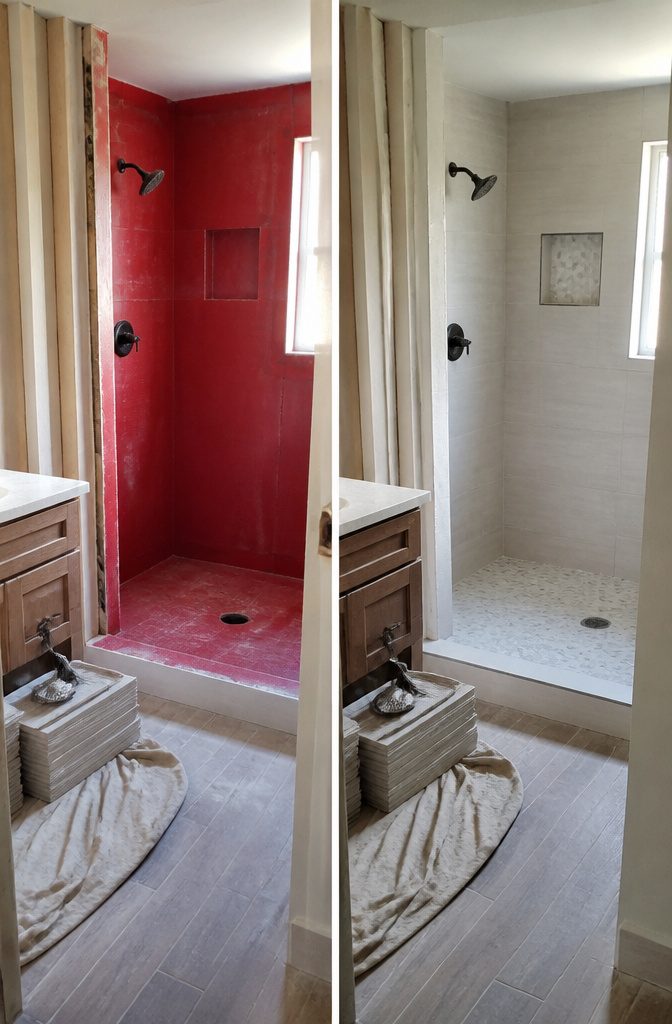
A refresh swaps the surface: new tile, new grout and a new showerhead, with little demolition.
A full rebuild strips the shower to the studs and applies a waterproof membrane to the walls and floor before custom tile, niches or other features go in.
Schluter Kerdi and RedGard are common membrane choices. The membrane is required by building code and prevents mold and structural damage, so skip any bid that omits it.
Permits follow the scope.
Swapping tile or fixtures often needs none, while plumbing changes, footprint changes or structural work often do. Keeping the plumbing where it is holds down cost and time.
Recommended Products

【Designed for Organized Bathroom Storage】 Whether you're upgrading a walk-in shower, remodeling a bathroom, adding storage to a wet room, or organizing a compact bath space, this 24"x12" recessed niche keeps your essentials within easy reach without cluttering your shower area. Interior dimensions: 24"W x 12"H x 4"D | Exterior dimensions: 25"W x 13"H x 4"D. The built-in design creates a clean, streamlined look while providing practical storage for shampoo, soap, and other bath necessities

【Superior Water Resistance 】Our shower niche undergoes rigorous manufacturing processes to ensure its waterproofing performance. Each corner is sealed and reinforced to create a watertight barrier, effectively preventing moisture penetration and damage to your bathroom walls.

【Built-In Waterproof LED Lighting】Brighten your shower experience with integrated, energy-efficient LED strips. This shower niche provides perfect warm white illumination (3000K) for easy visibility, creating a spa-like ambiance while making your toiletries easily accessible day or night
Tub-to-Shower Conversion
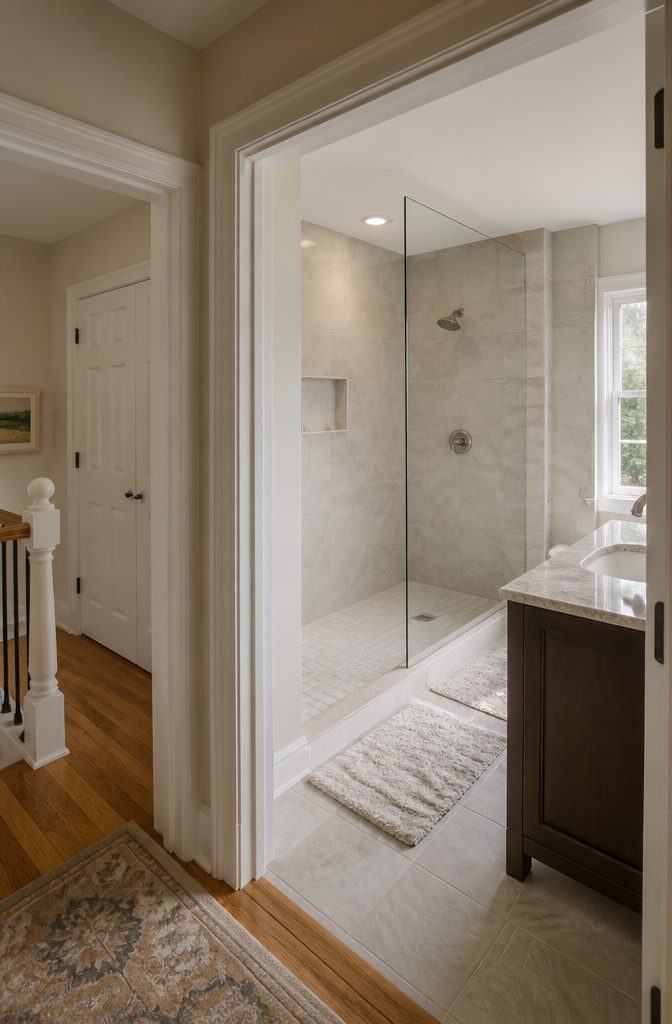
Removing a tub and building a walk-in shower in its footprint is the standard conversion.
The reverse also works: a shower stall can be replaced with a tub if your household needs one. Either way, call your local building department before demolition, because conversions often need a permit.
Resale is where this choice gets decided.
Homes with at least one tub tend to appeal to families with young children. If your home has two bathrooms, convert one tub to a shower and keep the tub in the other.
If the tub is your only one, weigh the conversion more carefully. Whether it pays off depends on the home and your local buyer market.
Recommended Products

Bernkot Stainless Steel Arched Niche Recessed Shower Niche for Bathroom Wall

360° Coating Process:Constructed from 304 stainless steel with a premium protective coating,this recessed wall niche features excellent resistance to scratches and corrosion.

Premium Italian Marble: Crafted from authentic Bianco Carrara marble with elegant white and soft gray veining for a timeless, luxurious appearance.
Shower Materials and Upkeep
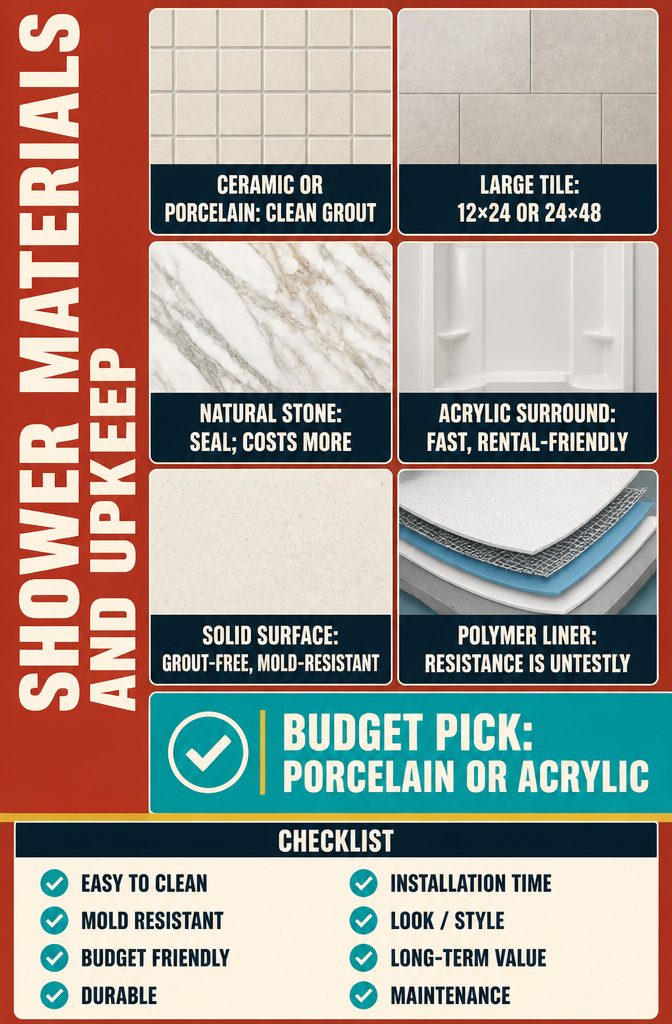
Grout and sealing decide how much scrubbing you sign up for.
- Ceramic or porcelain tile comes in hundreds of styles at budget to high-end prices, but every grout line needs cleaning.
- Large-format tile (12×24 or 24×48) has fewer grout lines and suits modern or transitional looks.
- Natural stone (marble, travertine, slate) needs sealing and costs more in material and labor. Skip it on a tight budget.
- Acrylic or fiberglass surrounds install fast and suit rentals. Skip them if you want a custom tile look.
- Solid-surface panels (Swanstone, Corian) are grout-free and resist mold and mildew.
- Multi-layer polymer liners (Tuscany, Metapeake, Galena designs) are claimed by the manufacturer to resist cracking, dents, mold and mildew. That is a marketing claim, not a tested result.
For a low-maintenance budget project, choose large-format porcelain or an acrylic surround, and spend extra only if you want solid-surface panels.
Recommended Products

HIGH-GLOSS WET LOOK FINISH – Enhances ceramic tile sealer and porcelain tile sealer performance with a clear, reflective shine that refreshes dull surfaces and improves the appearance of tile and grout sealer applications in showers and floors.


Features and Accessibility
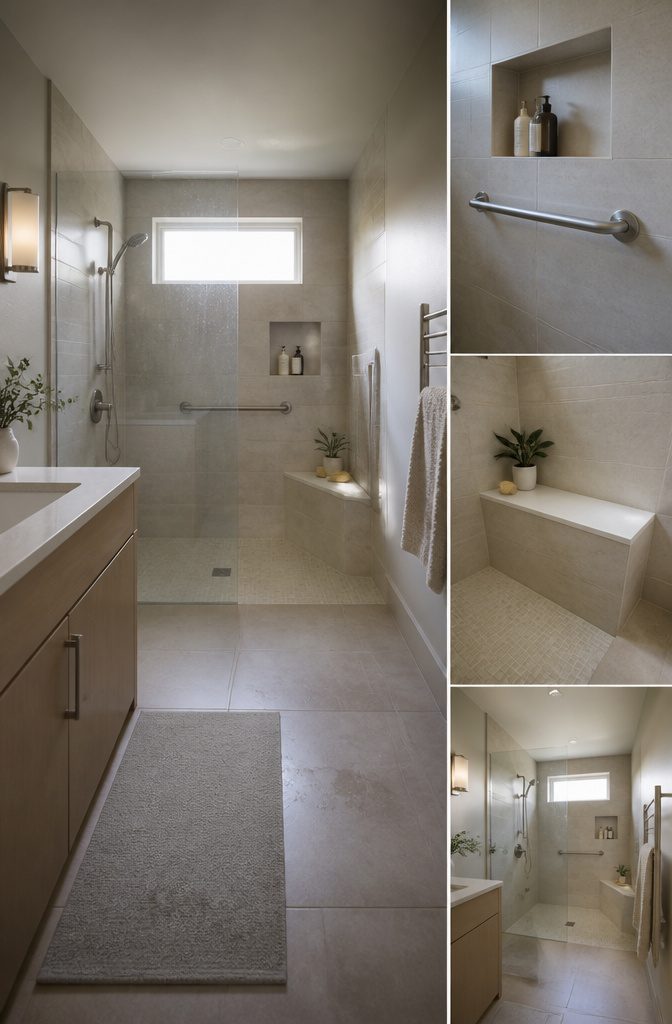
These features give the most use per square foot, and all of them are easier to build in from the start than to add later.
- A walk-in shower of 36×36 inches is the minimum comfortable size, and 36×48 or larger is preferred. A small bathroom can still take one, especially if it replaces a bulky tub.
- Barrier-free entry: No curb to step over. This helps older adults and anyone with mobility challenges.
- Grab bars: Ask for solid blocking in the walls during framing, even if you skip the bars for now.
- Bench seating: Best in the 36×48 footprint or larger, where it won’t crowd you.
- Niches: Recessed shelves keep bottles out of the spot where you stand.
- Glass enclosures: A clear panel keeps a small room open, but it shows water spots.
Recommended Products

Safer Step-Through Access Converts an existing bathtub into a safer, lower step-through entry for easier access.
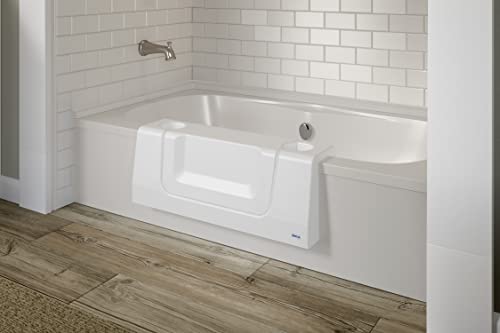
Dual-Function Design Converts your existing bathtub into a safer step-through shower while preserving the ability to enjoy a full bath.

【Drill-Free & Easy Install】This versatile bathtub faucet sprayer attachment fits perfectly with most household faucets. Equipped with a premium 3-way brass diverter and multiple size adapters to match mainstream calibers, it realizes tool-free installation without drilling or damaging the wall, ideal for renters and apartment dwellers.
Choosing a Contractor
National chains like Bath Fitter, American Standard Bathroom Remodeling, DaBella and Re-Bath sell a set system with a set process.
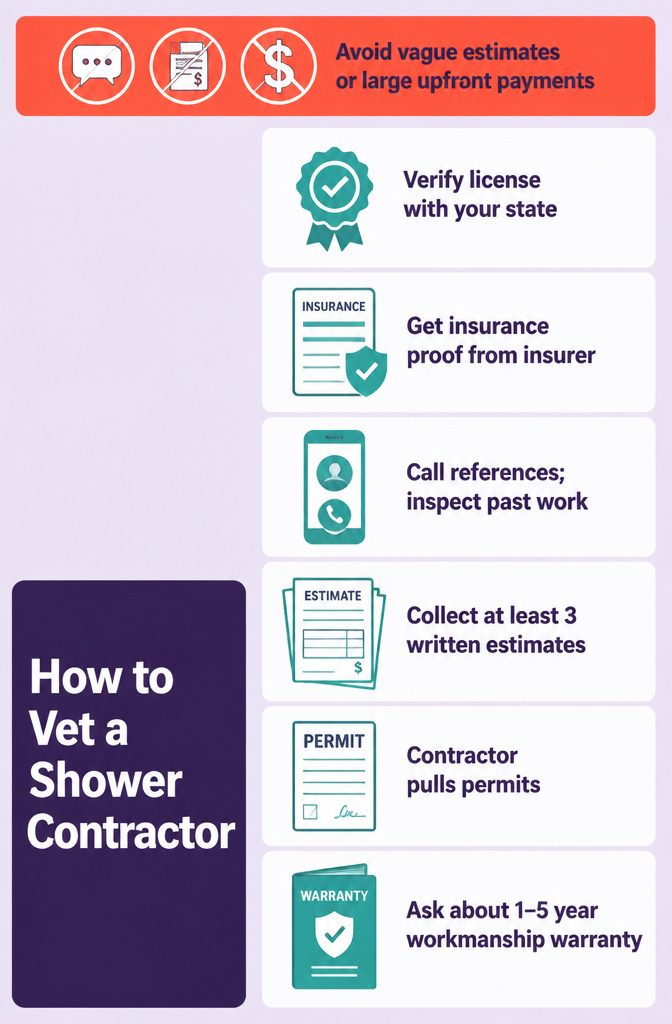
A local contractor knows your city’s permit office and code quirks, which matters most if the job moves plumbing. Vet either type the same way:
- Check license status with your state, not on the contractor’s own website.
- Get the insurance certificate directly from the insurer.
- Call references and ask to see past work.
- Collect at least 3 written estimates, then read each contract for scope, timeline and payment schedule.
- Have the contractor pull the permits.
- Ask about workmanship warranties, which typically run 1 to 5 years, and about separate manufacturer warranties on the fixtures.
Walk away if you see no proof of credentials, vague or verbal-only estimates, or requests for a large upfront payment.
Recommended Products
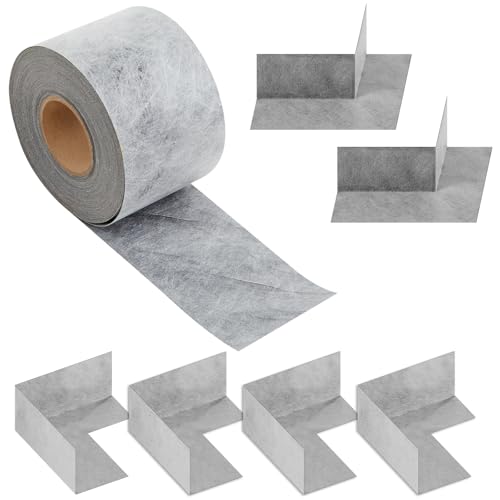
Waterproof Membrane Kit: this waterproof sealing kit includes 4 inside waterproof membrane sheets, 2 outside waterproof corner membrane sheets, and 1 roll of 0.42 x 100 ft (42 Sq ft ) waterproof membrane; Made of high density polyethylene, this shower enclosure waterproof membrane seam tape effectively waterproofs and prevents moisture, meeting diverse user needs

PREMIUM WATERPROOF MATERIALS: This waterproof membrane features a high-density polyethylene (PE) core, reinforced by non-woven polyethylene layers, this three-layer membrane promises exceptional waterproofing, ensuring wet areas stay protected from moisture and creat a dry and healthy environments for you and your family members.

Ready-to-use waterproofing membrane
What a Shower Remodel Costs
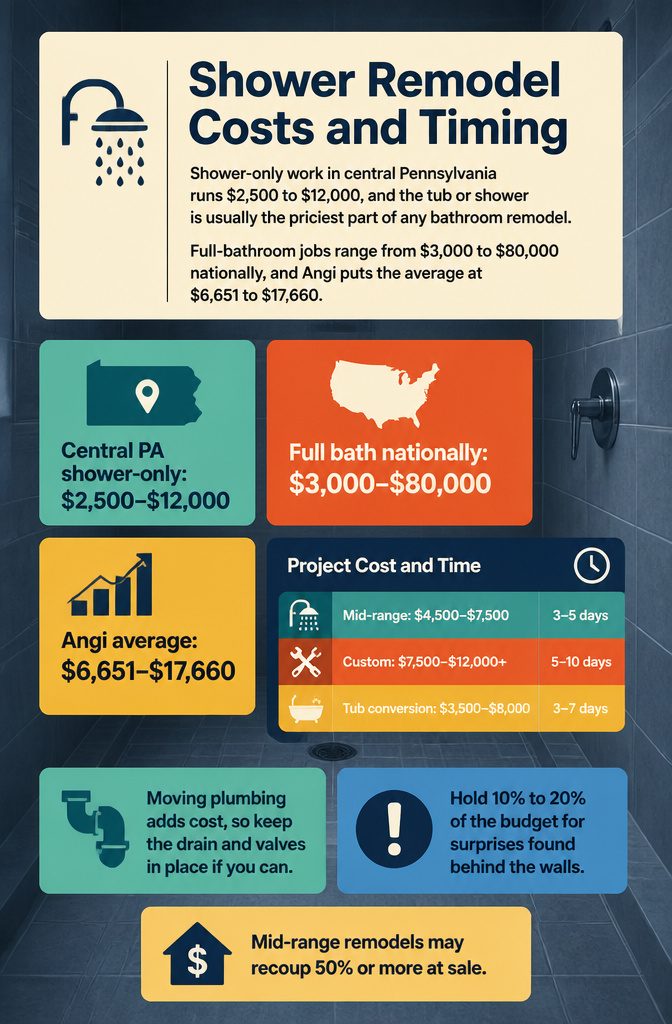
Shower-only work in central Pennsylvania runs $2,500 to $12,000, and the tub or shower is usually the priciest part of any bathroom remodel. Full-bathroom jobs range from $3,000 to $80,000 nationally, and Angi puts the average at $6,651 to $17,660.
| Project | Cost | Time |
|---|---|---|
| Mid-range remodel | $4,500–$7,500 | 3–5 days |
| Full custom rebuild | $7,500–$12,000+ | 5–10 days |
| Tub-to-shower conversion | $3,500–$8,000 | 3–7 days |
Moving plumbing adds cost, so keep the drain and valves in place if you can.
Hold 10% to 20% of the budget for surprises found behind the walls. Mid-range remodels may recoup 50% or more at sale.
Plan for 3 to 7 Days Without a Shower
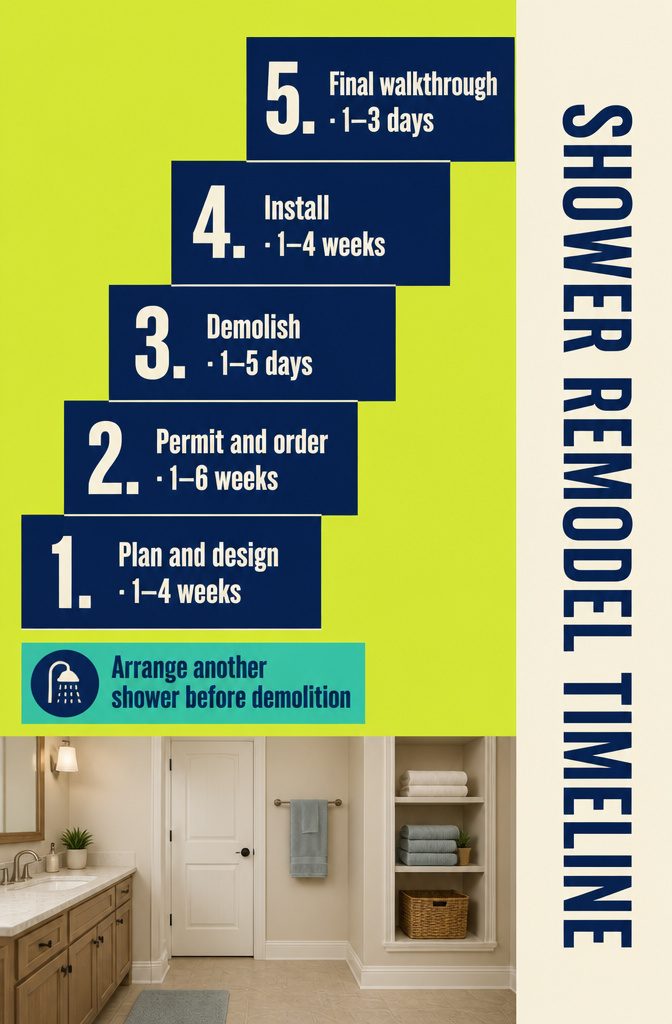
A shower-only job usually means 3 to 7 business days without a shower, not counting material lead times.
Mid-range updates run 3 to 5 days, full rebuilds 5 to 10, and conversions 3 to 7. The full sequence runs in this order:
- Planning and design: 1 to 4 weeks.
- Permitting and ordering: 1 to 6 weeks.
- Demolition: 1 to 5 days.
- Installation: 1 to 4 weeks.
- Final walkthrough: 1 to 3 days.
Liner-style jobs advertise faster installs. Bath Fitter claims 1 day, American Standard 1 to 2 days, and Re-Bath 3 to 5 days.
Those are company claims for that product type. Line up a second bathroom or another place to shower before demolition starts.
Recommended Products

【24 X 12 INCH RECESSED STORAGE】 - Create a dedicated place for shampoo, body wash, soap, and other shower essentials. The built-in design keeps frequently used items organized without projecting into the shower area.

Capture the elegance of marble available in two colors

Cover more ground with every tile for fewer breaks across your room
Frequently Asked Questions
Recommended Products

SUPERIOR TILE GROUT SEALER: Protects tile and grout from water, stains, and dirt. Ideal for kitchens, bathrooms, and showers. Maintains a clean look for longer lasting surfaces.

✅️【Why Choose Our Product】FURRELOR Tile Sealing Spray solves grout darkening, dirt buildup and water seepage. Once fully dried, it creates a transparent, durable protective film that retains the original color and texture of grout. Boosting grout’s waterproof and anti-stain ability, it extends the lifespan of tiles and grout for long-lasting indoor protection.

Keep a clean, NATURAL APPEARANCE and improve the DURABILITY of your grout in your shower, kitchen, bathroom, and tile flooring
Can I remodel just the shower and leave the rest of the bathroom alone?
Yes. If the toilet, vanity, flooring and lighting still work, you can redo only the shower and avoid the cost and mess of a full-room job.
Choose a full remodel instead if water damage has reached behind the shower walls or the other fixtures need replacing too.
How much does a shower bath remodel cost?
Shower-only work in central Pennsylvania runs $2,500 to $12,000.
Mid-range remodels cost $4,500–$7,500 and full custom rebuilds cost $7,500–$12,000+. Full bathroom jobs range from $3,000 to $80,000 nationally, and Angi puts the average at $6,651 to $17,660.
Is $5,000 enough to remodel a bathroom?
It can cover a shower-only remodel at the low end of mid-range, which runs $4,500–$7,500 in central Pennsylvania.
It falls short for most full bathrooms, since Angi’s average range starts at $6,651. Keep the drain and valves where they are and set aside 10% to 20% for surprises behind the walls.
How much does it cost to replace a bathtub with a shower?
A tub-to-shower conversion typically costs $3,500 to $8,000 and takes 3–7 days. Call your local building department before demolition, because conversions often need a permit.
What is the most expensive part of a bathroom remodel?
The tub or shower is usually the priciest part. Moving plumbing adds to the bill, so leaving the drain and valves in place is the easiest way to hold the total down.
How long will a shower remodel take?
Expect 3 to 7 business days without a shower.
Mid-range updates take 3–5 days, full rebuilds 5–10 and conversions 3–7. Planning, permits and ordering come before demolition and can add several weeks, so line up another place to shower.
Can I remodel my shower if the plumbing stays in the same location?
Yes, and it is the cheaper route. Keeping the plumbing where it is holds down both cost and time, and it can help you avoid a permit, since plumbing changes often require one.
Is a tub-to-shower conversion worth it for resale?
It depends on your home and local buyer market.
Families with young children tend to like homes that have at least one tub, so in a two-bathroom house, convert one tub and keep the other. If the tub is your only one, weigh the conversion more carefully.
What is the most low-maintenance shower material?
For a budget project, large-format porcelain tile or an acrylic surround is the easiest to keep clean, because there are few or no grout lines to scrub.
Solid-surface panels such as Swanstone or Corian are grout-free and resist mold and mildew, but they cost more.
Do I need to waterproof behind shower tile?
Yes.
Building code requires a waterproof membrane on the walls and floor, and it prevents mold and structural damage. Schluter Kerdi and RedGard are common choices, and any bid that leaves it out should be passed over.
Can I get a walk-in shower if my bathroom is small?
Yes.
A walk-in shower needs at least 36×36 inches to be comfortable, and 36×48 or larger is better. Replacing a bulky tub can free up the space.
How many estimates should I get before choosing a contractor?
Get at least 3 written estimates. Read each contract for scope, timeline and payment schedule, and walk away from anyone who offers only a verbal or vague number.
What questions should I ask a bathroom remodeling contractor?
Ask about credentials, permits, references and past work, subcontractors, who manages the project, the timeline, change orders, warranties and how they will communicate with you. Also ask the contractor to pull the permits.
How do I verify a contractor’s license and insurance?
Check the license status with your state rather than on the contractor’s own website. Request the insurance certificate directly from the insurer, not from the contractor.
Do bathroom remodeling contractors offer warranties?
Many do.
Workmanship warranties typically run 1 to 5 years, and the fixtures often carry separate manufacturer warranties. Coverage varies, so get the terms in writing before you sign.