
The ideas range from pillows and a rug to a mustard sofa and marble paneling, and what sorts them is how easily you can undo each change.
Renters should start with textiles and paint only if the lease allows. The sofa is the biggest purchase here, so bold pillows or a slipcover can bring the color first.
1. Color Palettes
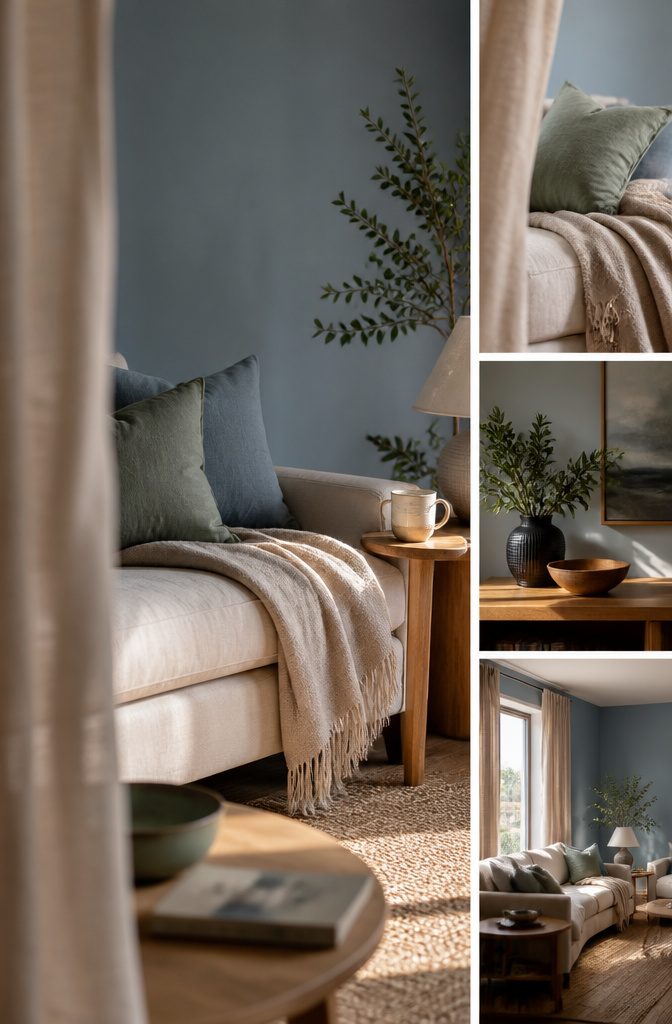
Palette sets the mood before any furniture does.
Delicate pink feels soft and gentle, while muted blue feels quiet and tranquil. Natural colors and warm hues make a room feel settled and inviting.
Monochrome looks clean and calm if you vary texture within one shade. Rich colors like deep teal with grey feel snug and dramatic, and cool gray feels crisp but can turn cold without warm fabrics.
For a renter on a budget, the best pick is a calming palette of muted blue or gentle green with warm neutral textiles.
It suits most existing floors and furniture. Paint and textiles are the cheapest ways to change a palette, so start with pillows, throws, and curtains, and paint only if your lease allows it.
Recommended Products

Fabric:Uniquely blended woven of 20% flax linen plus 80% polyester.Unlike primitive 100% linen fabric being too stiff and skin unfriendly,polyester helps on fabric soft,easy wash and wrinkle free but linens still keeping organic speck aesthetic from nature.

Ready Made: Sold in pairs, package includes 2 floral and leaves pattern light filtering drapes which measures 52 inch wide by 95 inch long. Each panel with 8 metal grommets fit up to a 1.5" rod, makes it incredibly easy to hang and no harm to your rod.

2 Panels Set: Each package includes 2 botanical leaf floral curtain panels, each 40"W x 84"L. Combined width of 80 inches provides full, elegant coverage for most windows. Ideal for living room, bedroom, dining room, kitchen, farmhouse, cottage, kids' room, and home office. These are the perfect cortinas para ventanas (window curtains) for anyone needing soft privacy without darkening the room.
2. A Statement Sofa
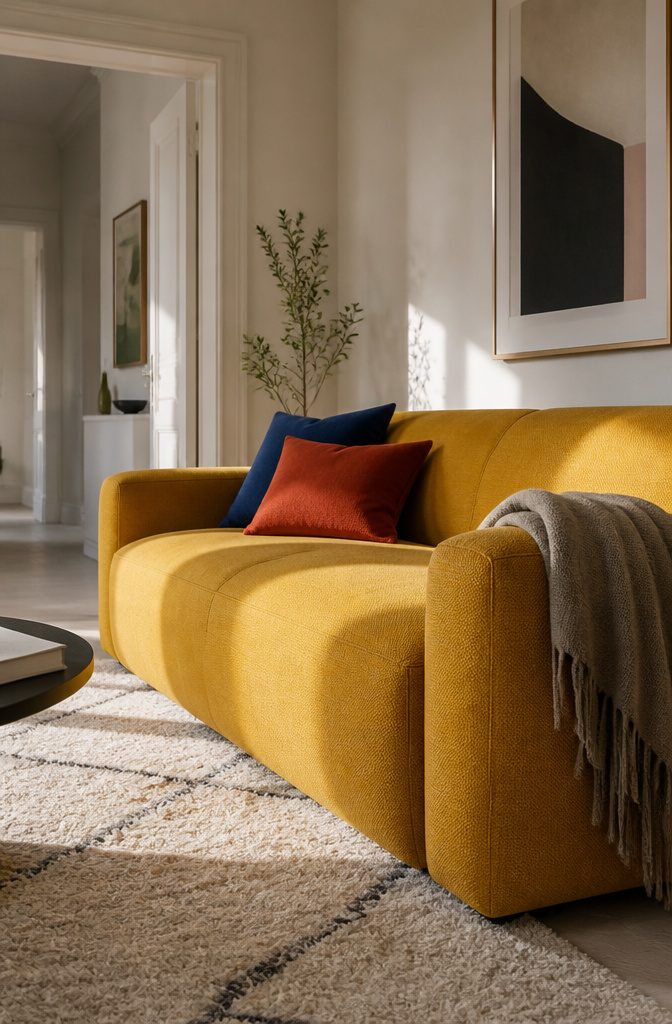
A mustard yellow sofa against cream walls shows how little else the room has to do. Keep the walls and floors light and plain so the sofa is the one thing the eye lands on.
When a bold sofa, a patterned wall, and a busy floor all compete, none of them wins, and the room looks cluttered instead of confident.
A statement sofa is also the biggest purchase on this list.
If the budget is tight, start with a neutral sofa and bring in the color through bold pillows, or put a slipcover in the shade you want over the one you own.
Pillows are the better pick for renters, since you can swap them in minutes when you want a new look.
Recommended Products

Sold By Piece Not Set: Jacquard Sofa covers are made of plush fabric, which is soft and smooth to the touch and not easy to collect hair or pets fur. Please refer to our measuring guide and measure your furniture prior to order, Sold by PIECE but not set, good for your adjustable sectional sofa & couch.

[Premium Material] hyha couch covers for sofa made of high-quality chenille fabric, thick, anti-slip, soft, and durable, which can provide your sofas a new look.

𝐇𝐢𝐠𝐡 𝐐𝐮𝐚𝐥𝐢𝐭𝐲: Furniture protector couch cover is made of thick chenille fabric, super soft, comfortable and warm. Environmental mustard yellow color printing and carefully woven to ensure softness,rich texture and durability, thick and durable for years of washing and drying, without pilling or fading. Skin-friendly, wrinkle-resistant, four seasons universal
3. Wallpaper and Accent Walls
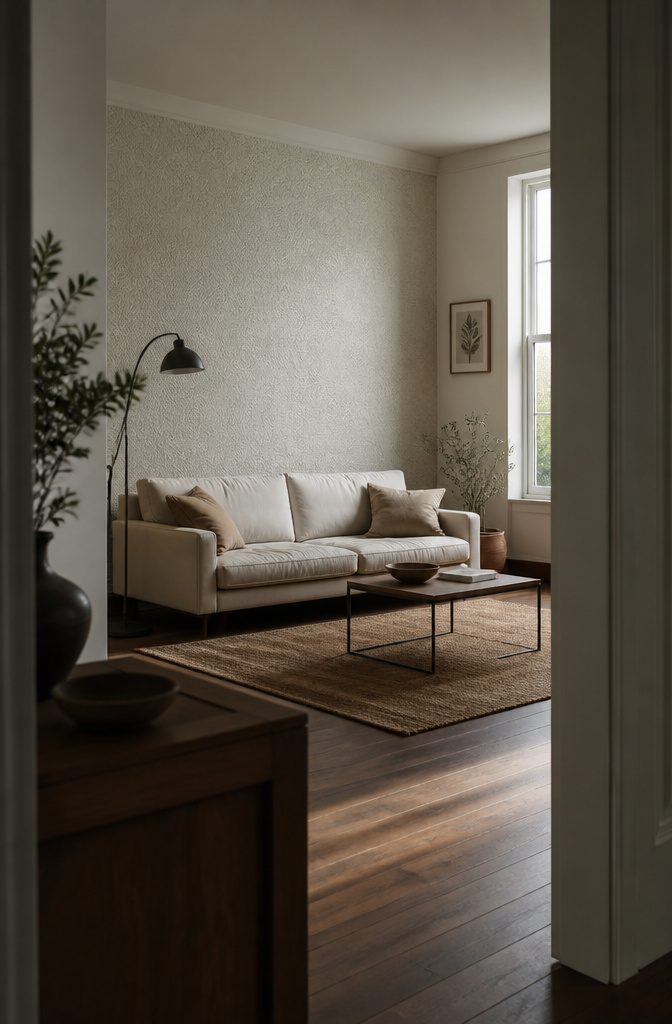
Pick one wall to carry the room, usually the one behind the sofa or the one your eye lands on first from the doorway.
Wallpaper, a mural, or paneling there turns it into the focal point while the other three walls stay quiet.
If a loud pattern feels like too much to live with, choose textured or embossed wallpaper.
The raised surface adds depth and a refined, sophisticated look without a print competing with your furniture, and it’s the safer pick if you tire of busy designs.
For more drama, paint the single wall in a rich, deep hue instead.
Recommended Products

Peel and Stick Wallpaper: Compared to traditional wallpaper, this peel and stick wallpaper can be installed/removed quickly and without residue, making it ideal for renters or those who update their decor frequently

🏠DETAILS: Size 15.8 x394 Inch , total 43.3 sq.ft(40cmX10m), Self adhesive (no extra glue needed). Made of vinyl. Green concrete wallpaper peel and stick, Waterproof, Renter friendly, Textured.

Gothic Textured Wallpaper: The black 3D embossed texture plays with light and shadow to turn a plain wall into a moody, gallery-worthy accent wall. Ideal for gothic bedrooms, living room feature walls and even Halloween party backdrops -- no paint, no drilling, no landlord drama
4. Natural Materials
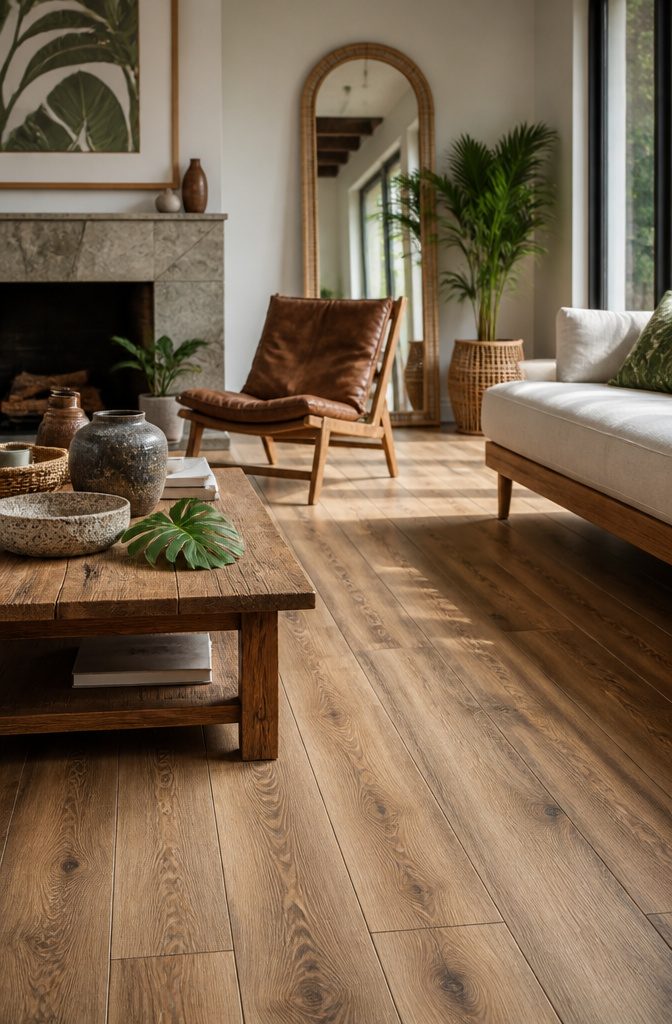
Wood does most of the work in a natural living room.
One statement piece, such as a wooden coffee table or sideboard, anchors the space, and smaller wood accents repeat the tone elsewhere. A rattan mirror adds woven texture to a bare wall, and bamboo accessories bring a lighter, straighter grain.
For a rustic floor, wood-look laminate with a four-sided bevelled edge gives a more authentic finish than a flat-edged plank.
Pair it with stone and leather: stone adds cool weight, and leather adds warmth that softens with use. Botanical prints and a few tropical plants then tie the look together without competing with the wood.
Recommended Products

High Quality: This boho mirror wall art features premium rope and a mirrored finish, exuding a bohemian country style. Durable, exquisite, and beautiful, this wicker wall decor is perfect for home decor

BOHO DESIGN: This wall mirror features a beautifully hand woven rattan frame with scalloped edges, bringing warmth and texture to any wall, blending modern minimalism with coastal charm, creating an eye-catching focal point for entryways, bedrooms, or living spaces
5. Cozy Nook and Warm Lighting
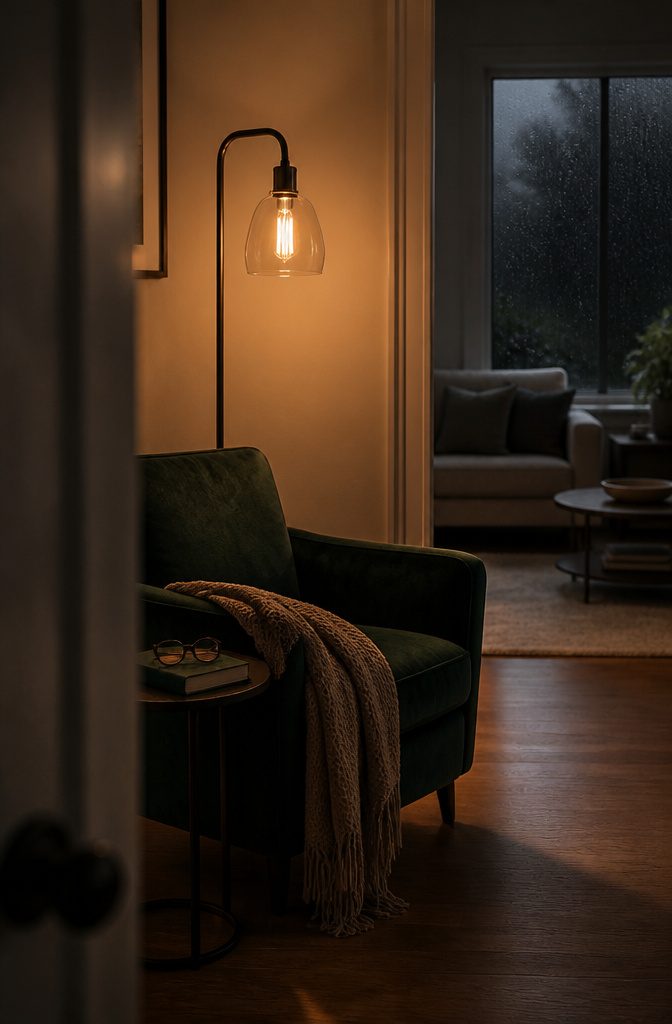
A quiet corner becomes a reading or relaxing spot once an armchair sits in it. Forest green velvet gives the nook a deep, rich color.
Grey linen effect is calmer. Choose velvet if you want the corner to be noticed, and linen if you want it to stay in the background.
Exposed filament bulbs add a modern, slightly edgy industrial look. They also give off a soft, warm glow that suits winding down after a long day.
Set a floor lamp with one of these bulbs beside the chair, and the corner reads as a place to settle in. Keep the light low, since the appeal is the gentle warmth, not brightness.
Recommended Products

STOP FURNITURE FROM MOVING: Furniture cups locks furniture in place while protecting hardwood, tile, laminate, linoleum, and any floors surface from damage from furniture. Square furniture pads won't scratch or damage the floor, the friction is excellent to reduce noise, it's safety & useful for any floors or carpet

STOP FURNITURE FROM MOVING: Furniture cups locks furniture in place while protecting hardwood, tile, laminate, linoleum, and any floors surface from damage from furniture. Square furniture pads won't scratch or damage the floor, the friction is excellent to reduce noise, it's safety & useful for any floors or carpet

Black Wood Contact Paper SIZE: 12" x 78", peel and stick wallpaper can cover 6.5 square feet. Upgraded thick contact paper for countertops table. Black wood wallpaper peel and stick vinyl has strong coverage, can easily cover dark furniture to meet your decorating needs.
6. Art Deco and Glam
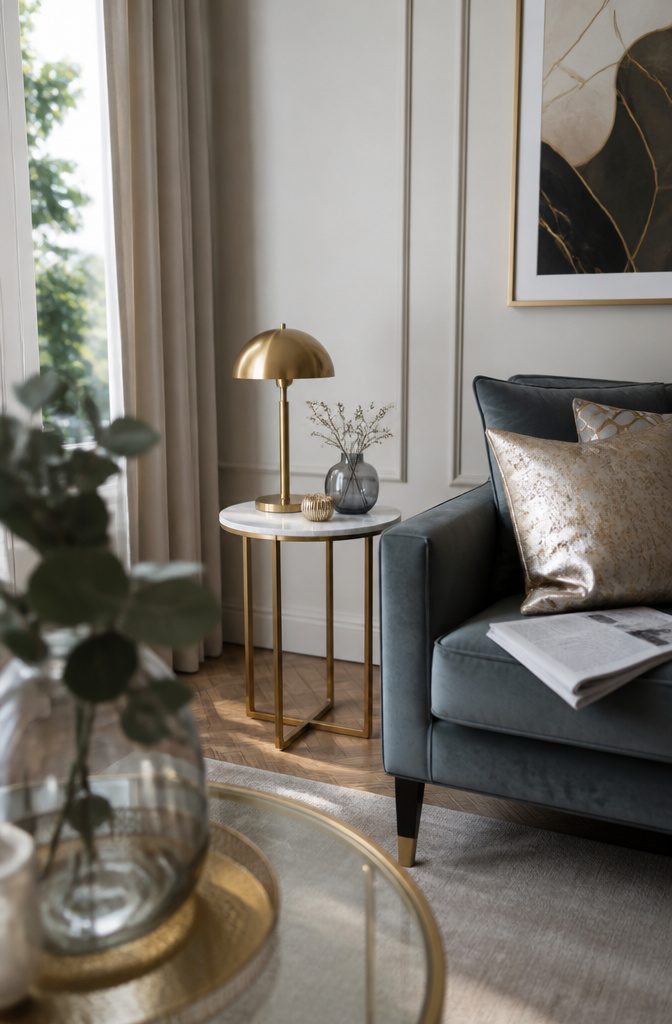
Art deco rests on geometric patterns, metallic accents and rich materials, and the cheapest way in is metallic-effect cushions plus a few gold accessories.
Velvet costs more. One velvet armchair gives you the 1920s look without committing the whole room, and it suits a renter’s budget better than a velvet sofa.
Marble and ornate wall panelling sit at the costly end, and renters should skip the panelling.
For a Parisian feel, keep the palette soft and muted so gold and marble read as chic instead of loud. One marble piece, like a side table, does more than several gold objects scattered around.
Recommended Products

BLACKOUT CURTAINS: These curtains are designed to block out light while enhancing privacy, providing thermal insulation, and reducing noise. After returning to your bedroom on a sunny afternoon, simply close the curtains to create a dark, quiet, and comfortable environment for a restful break

READY MADE:2 PANELS in 1 package.You can hang these casual curtains drapes with three methods: back tab, rod pocket, or curtain clips.Rod pocket top allows for a modern touch while back tabs add an elegant flair.It pair with blinds or sheers for extra opacity and privacy.

PACKAGE INCLUDES: 2 panels per package. Each package includes two ombre blackout curtain panels of 52"W x 84"L,one set measures: 104"W x 84"L. Each curtain panel has 8 rustproof silver metal grommets on top. Each grommet inner diameter is 1.6 inch, fits most standard rods in the market. Easy to hang, and slide smoothly. These gradient blackout living room curtains are soft and smooth.
7. Mid-Century Modern
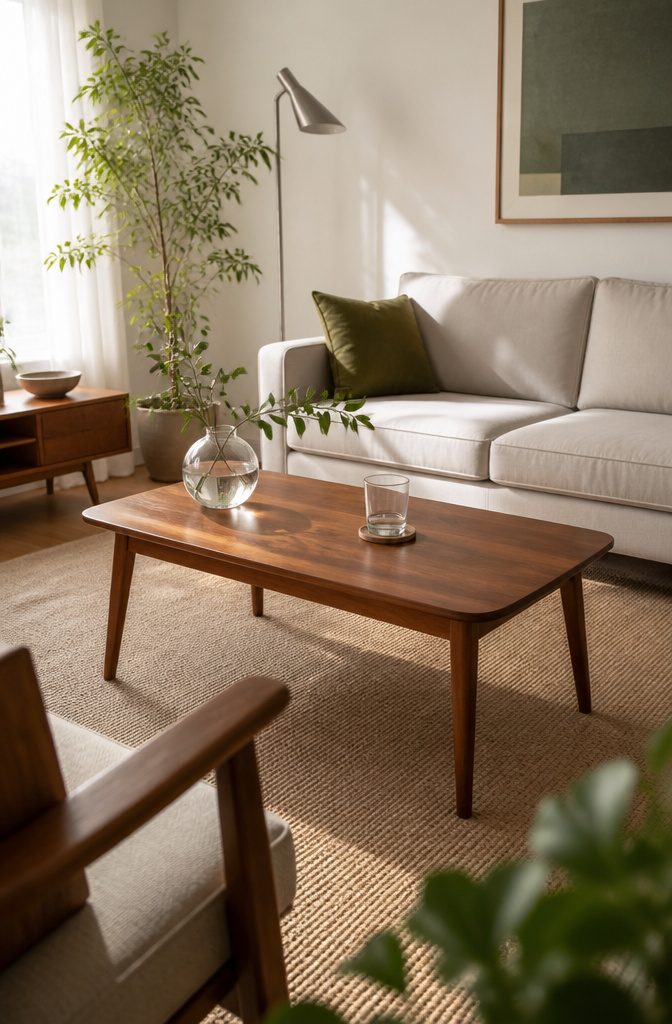
Mid-century modern runs on clean lines, both curved and straight, with no elaborate detailing. A tapered leg or a gently rounded edge fits; carving and ornament do not.
At minimum, the look needs one rich wood tone such as teak, set against metal, glass, or plastic. A wood coffee table beside a metal floor lamp and a glass vase covers all three.
Wood is the easiest place to thrift. A side table, console, or bookshelf with simple lines suits the style even when the finish is worn, and it costs far less than a new piece.
Keep the sofa and walls plain so the wood stands out. Metal and glass accents are cheap to add one at a time.
Recommended Products

👍 SOFT VELVET FABRIC -- The sofa slipcovers are made of luxurious velvet plush material, which is soft and delicate, comfortable and skin-friendly. The ultra high stretch and thick fabric is durable, and it is not easy to fade.

SOFA PROTECTION FOR PET OWNERS: Protect your furniture from pet hair, scratches, dirt, drool, and everyday messes. This couch cover helps keep your sofa looking clean and fresh while reducing daily wear and tear caused by pets and family use.

[1 Pc 28''x47''/NOT ALL SET]: Our sofa cover is made of cotton fabric which is soft and smooth to the touch and not easy to collect hair or pets fur.Please Note: Sold by PIECE, Not All Set.
8. Boho and Maximalist
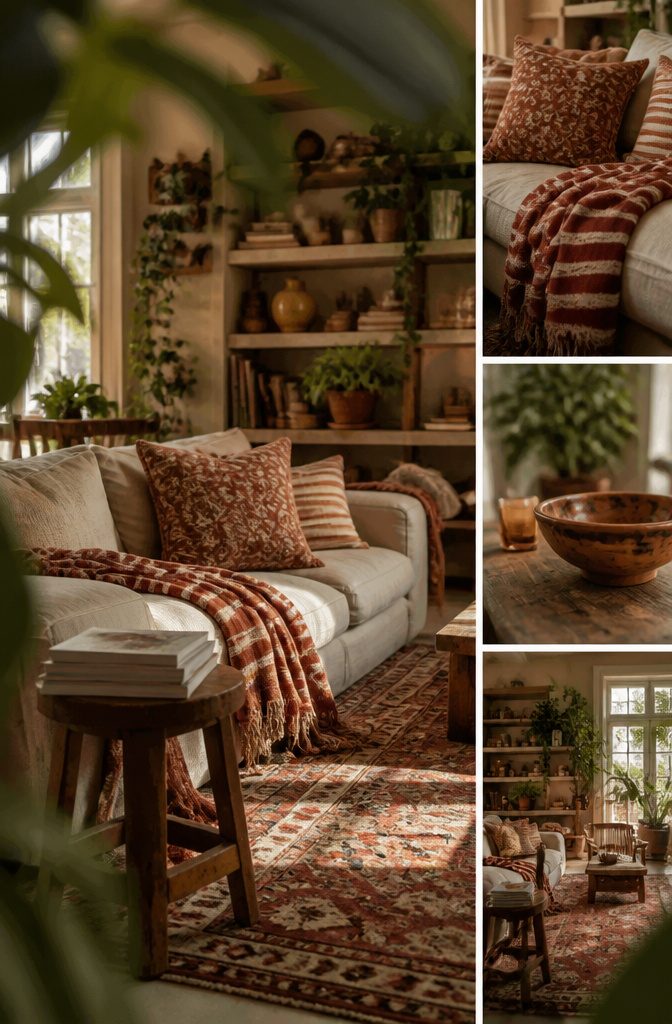
Bohemian and maximalist share a lot: saturated color, mixed patterns, and textures piled on top of each other.
Bohemian is the looser of the two. Furniture sits casually, nothing has to match, and the room looks collected over time.
Maximalism is more layered and more deliberate. Patterns clash on purpose, shelves and walls fill up, and accessories vary widely in shape and scale.
For a plain room, start bohemian, because it forgives mistakes. To push toward maximalism, repeat one color across every clashing pattern so the mix reads as planned instead of chaotic.
Add accessories a few at a time. A room that feels too busy is easy to edit, but one filled in a single afternoon is hard to undo.
Recommended Products

【Size & Effortless Installation】 This Yenhome faux 3D embossed geometric peel and stick wallpaper measures 17.5 inches in width and 118 inches in length, covering a total area of 14.34 square feet. Equipped with precise grid lines on the back, it enables quick cutting and seamless application, and leaves zero glue residue upon removal—making this waterproof self-adhesive wall panel extremely friendly to renters and homeowners alike, no professional installation required.

Peel and Stick Wallpaper: Compared to traditional wallpaper, this peel and stick wallpaper can be installed/removed quickly and without residue, making it ideal for renters or those who update their decor frequently
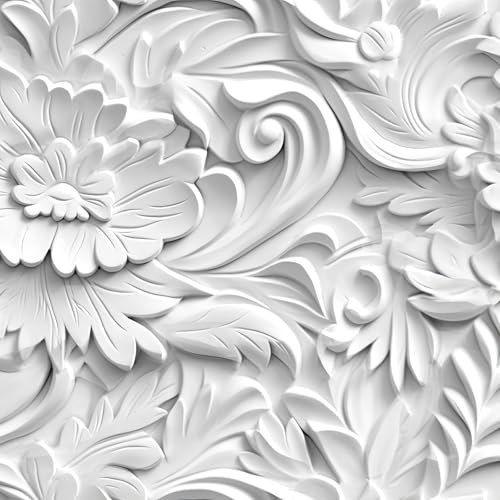
Effortless DIY Installation: No glue, no mess, no extra tools required. This faux 3D wallpaper is self adhesive, waterproof and removable, allowing you to transform any space in minutes.
9. Cottage Style
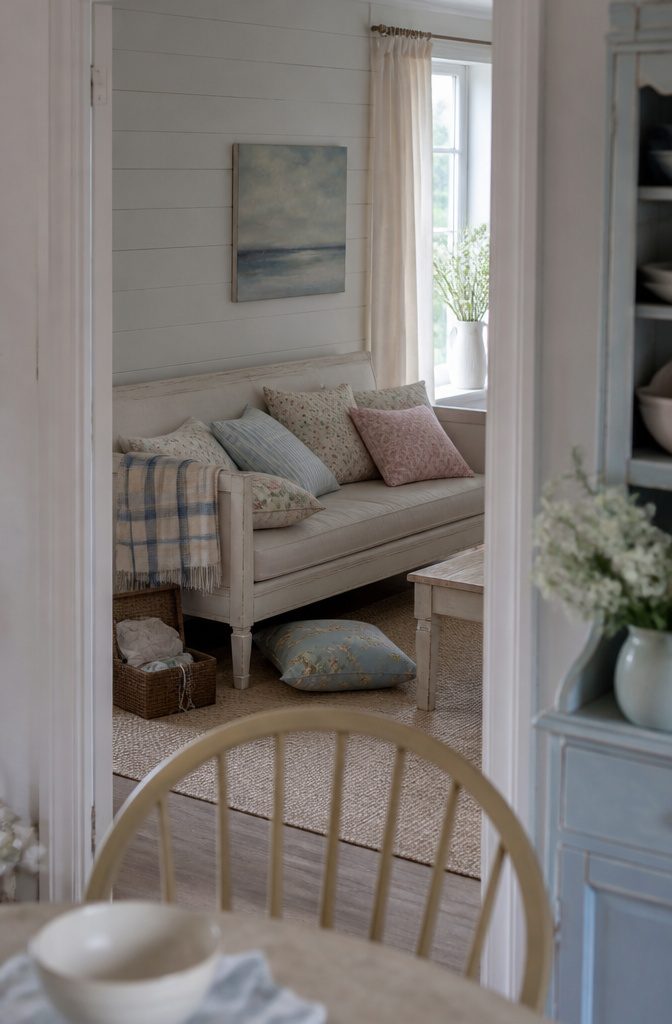
Cottage layering repeats one soft color family across several patterns.
Drape a check throw over the sofa arm, then add mismatched cushions in a floral, a stripe and a small print, all in pastels like pale blue, butter yellow or blush.
Mix pattern scale, large next to small, so no single print dominates. Shiplap wall panels give the patterns a plain, textured backdrop.
Maximalist rooms stack bold, high-contrast color until every surface competes for attention. Cottage keeps the palette soft and lets the patterns mismatch on purpose, so the room reads relaxed instead of busy.
Choose vintage-inspired furniture with simple lines and let the fabrics carry the pattern. Ornate pieces on top of layered prints push the room toward maximalist.
10. Retro 70s Touches
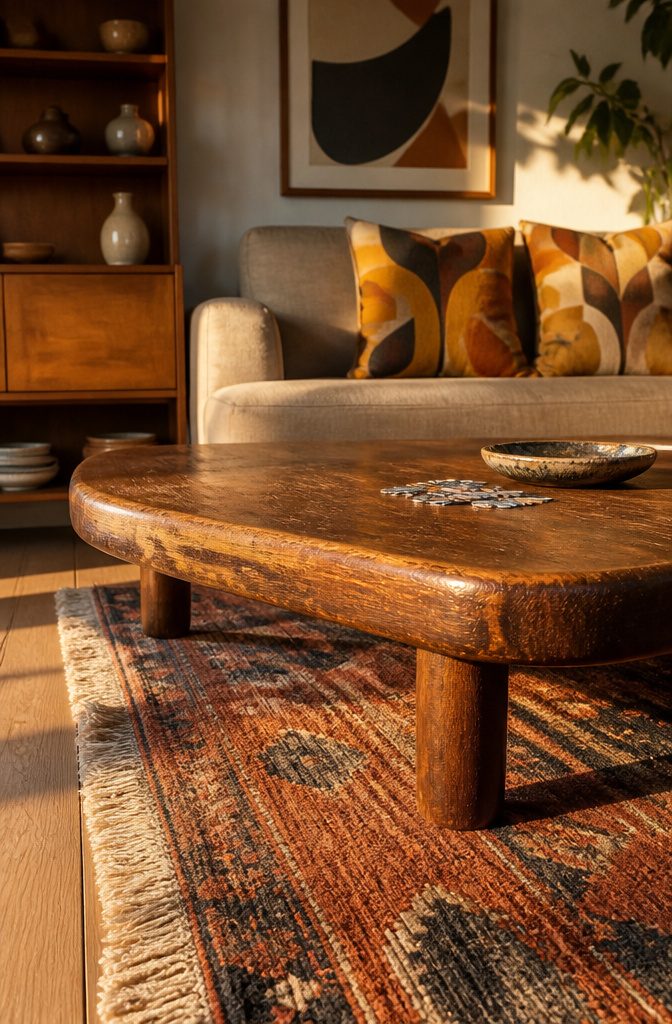
Secondhand is the cheapest way to get retro character. Thrift stores, estate sales, and online marketplace listings carry older furniture with a nostalgic feel, and a used piece usually costs less than a new reproduction.
Start with one reclaimed piece as the anchor, such as a coffee table or sideboard, and build around it.
Add a bold retro pattern in a small dose: a pair of pillows, a throw, or a framed print. Then pull your 70s-inspired colors from that pattern instead of buying matching sets.
A single strong pattern with a couple of colors drawn from it looks collected. Three competing patterns look like a yard sale.
Recommended Products

✌️ HUGE QUANTITY OF FURNITURE PADS FOR ALL YOUR NEEDS - ALL SIZES AND MANY BIG FELT PADS - 235 pieces: (1) 4 1/3x6”, (20) 2½x½”, (16) 2”, (16) 1 ½, (78) 1”, (40) ¾”, (64) 3/8”. Furniture Pads for all home furniture and items!

Non-Slip & Easy Rolling:The BESBLEE office chair mat features a rubber backing that helps the mat stay in place while supporting smooth chair movement. The low-pile surface works well as a desk chair mat, computer chair mat, rolling chair mat, or floor mat for office chair use. Available in 3X4, 3X5, 4X5, 4X6, 30X48IN, 46X60IN, 3FT Round, 4FT Round, and 5FT Round sizes.

【Scratch-Resistant Floor Protection】Our felt furniture pads create a soft cushioning layer between furniture and hard surfaces. Suitable for hardwood, vinyl, tile, laminate, and can also be placed under appliances. The thickened design protects floors from scratches and scuffs during furniture movement.
11. Textiles and Rugs
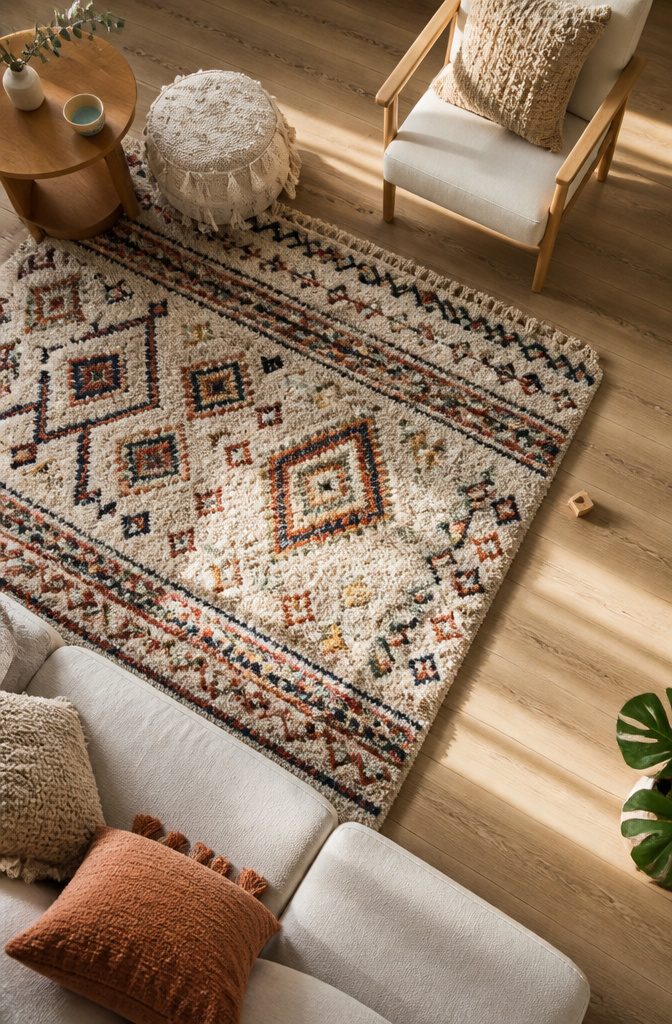
A rug is the cheapest way to add color and texture in one purchase, so start with the rug and build the rest around it.
In a simple, neutral room, a bold patterned rug livens up the whole scheme, and replacing it later is far easier than repainting. A soft, high-pile rug also makes the room feel warmer underfoot.
Then layer in different surfaces. Boucle cushions, plush tasselled cushions and a tasselled pouffe each feel different to the touch.
Embossed wallpaper adds texture on the wall. Keep at least one smooth piece nearby so the room looks varied rather than fluffy all over.
12. Geometric and Curved Patterns
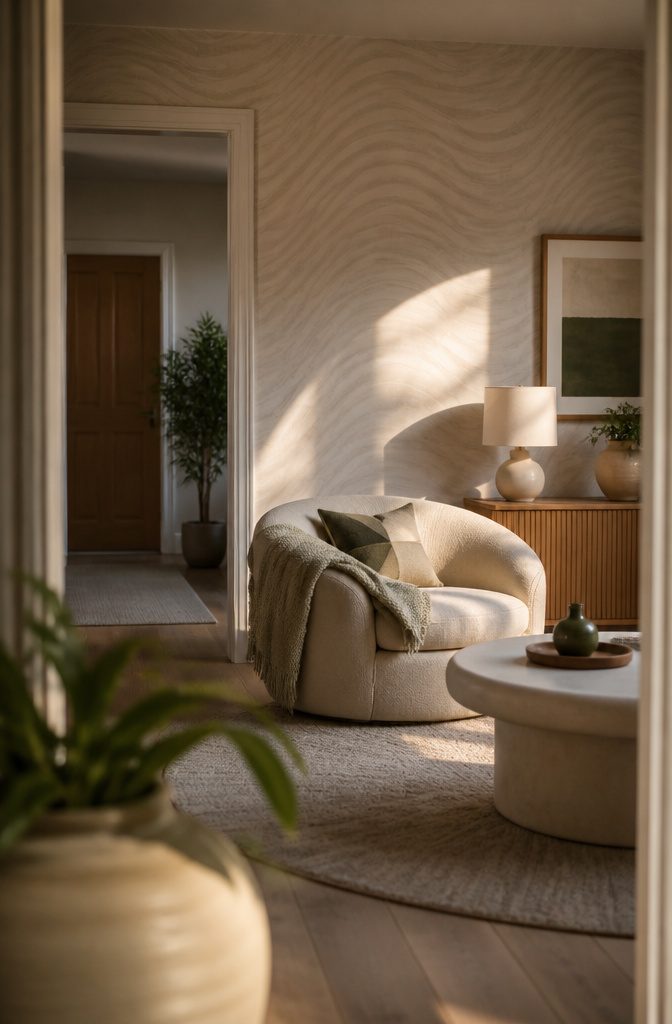
Geometric patterns arrive easily through curtains, cushions, blankets and wallpaper, and a bold stripe or grid gives a plain room a clear point of view.
Start with cushions and a blanket. They come off the sofa the day you tire of them, which makes them the safest test for a renter.
A boxy room is a different case. Four square walls and a rectangular sofa already supply plenty of angles, so curves do more for a boxy room than another grid.
Curved-pattern wallpaper, a rounded chair or table, and softly shaped plant pots and accessories break up the corners. One or two curved pieces are enough.
13. Art and Finishing Touches
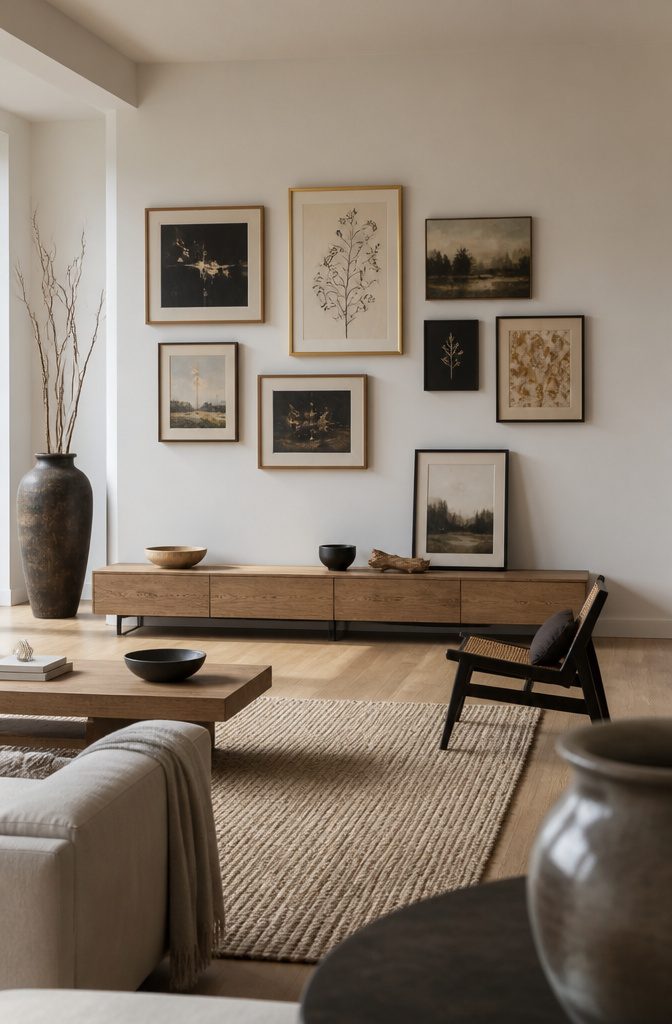
Mix art prints and photos you care about on one wall, and vary the frames.
Gold, light wood, and black side by side keep a gallery wall from looking like a store display. Lay the arrangement out on the floor first, so you can swap pieces before any nail goes into the wall.
An original painting or a sculpture does a different job. It gives guests something to ask about, and it adds a personal touch that a matched print set can’t.
A tall floor vase in an empty corner adds height without using wall space, and one branch is enough to fill it.
Coving, furniture and small accessories come last. Add them until the room feels finished, then stop while the surfaces still have some bare space.
14. Storage That Hides Clutter
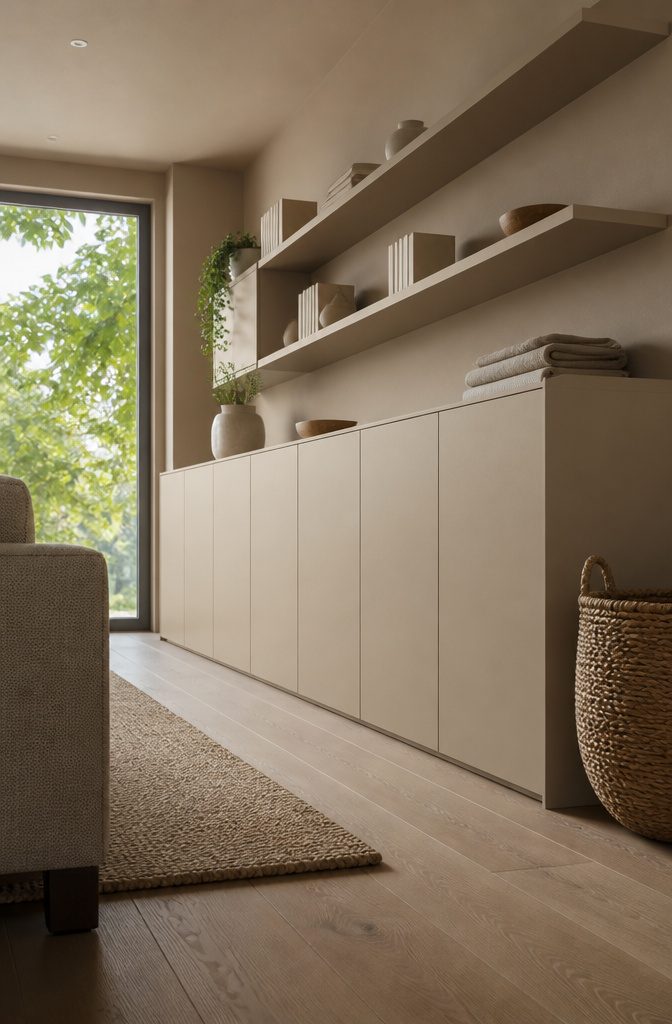
Tall bookcases and floating shelves use wall height and leave the floor open. Books, ornaments, and daily essentials sit up high, and the vertical lines pull the eye upward, so the room looks larger and more organized.
Floating shelves carry less visual weight than a full bookcase, which makes them the better pick for a very small room.
Closed storage hides clutter better than open shelves. The Atomia modular storage range is built from cabinets that can be fitted to the space you have, and it tucks away paperwork, toys, and dishes.
With any fitted or custom cabinetry, paint it the same color as the wall so it recedes instead of reading as another piece of furniture.
Statement Color Pairs
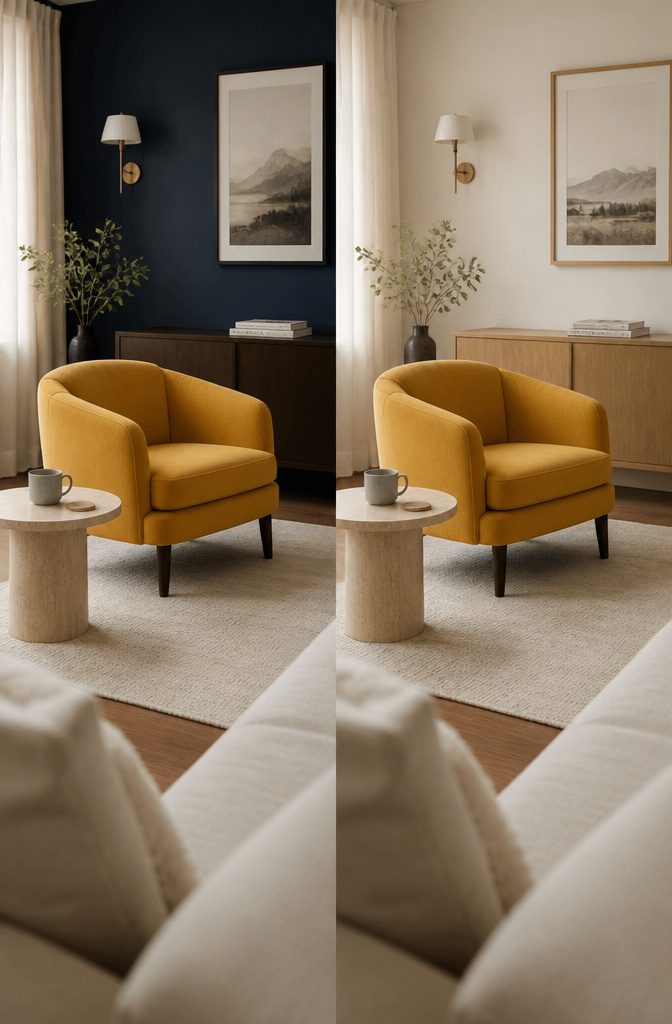
Mustard yellow against navy is a strong pairing because the two sit opposite each other on the color wheel.
The navy gives the yellow a deep backdrop to glow against. Try mustard chairs or a sofa in front of a navy wall, or keep the mustard against cream walls if navy feels heavy.
For red, Bamboozle by Farrow and Ball is a rich red that suits one accent wall rather than all four. Keep the furniture in front of it simple.
Gray and white rooms make the easiest base for a blue sofa or a red couch, since nothing else competes with it. Stick to one saturated piece per room.